
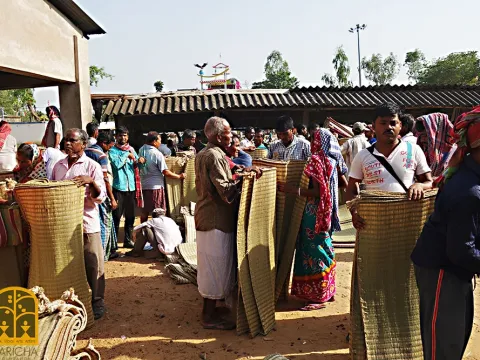
Cyperus pangorei
Cyperus pangorei
Sowing or planting of Cyperus pangorei is typically conducted during the start of the warm season when soil and water temperatures are conducive to rapid root establishment. The crop thrives in water-logged areas, necessitating well-prepared irrigation checks or wetlands.
What the section contains
Cyperus pangorei
Propagation is primarily achieved through rhizome division. Segments of healthy rhizomes are planted into the moist substrate at a depth of approximately five to ten centimeters. Proper spacing is critical to ensure even growth and prevent overcrowding in the early stages of development.
The success of the planting process depends heavily on immediate moisture management. Once established, the root system requires continuous contact with water to trigger vigorous shoot production and ensure the crop matures evenly across the entire plantation.
Optimizing the timing of planting allows the crop to benefit from long summer days, which are essential for biomass accumulation. Late spring is generally considered the most effective period, provided that the risk of frost has completely passed in the target region.
Before sowing, the soil should be ploughed and enriched with organic amendments to facilitate deep rooting. This preparation phase is crucial for establishing a robust plantation that will remain productive for several years without needing replanting.
Cyperus pangorei belongs to the Cyperaceae family and is highly adapted to aquatic or semi-aquatic environments. It requires a stable water supply, making it an ideal crop for flood-prone lands or areas with a high water table and consistent humidity.
The plant performs best in nutrient-rich alluvial or silty soils. These substrates provide the necessary structure for rhizome expansion while acting as a reservoir for minerals that the plant absorbs through its complex root network during the growth phase.
Light requirements are significant for this species. Cyperus pangorei is a sun-loving plant that requires high light intensity to produce long, straight, and strong culms. Shaded environments can cause the stalks to become thin and brittle, reducing their market quality.
Temperature stability is vital, as the plant does not tolerate freezing conditions. It thrives in tropical and subtropical climates where temperatures remain consistently warm, allowing for continuous metabolic activity throughout the growing season.
Management of water chemistry is also an important requirement. Stagnant water must be avoided to prevent soil acidification, which can hinder growth. Regular, slow-moving water circulation helps maintain the necessary mineral balance for healthy stalk development.
The yield of Cyperus pangorei is primarily measured by the quantity of high-quality stalks produced per unit area. With proper management of water levels and nutrient inputs, particularly nitrogen, the crop can achieve very high productivity rates.
The longevity of a plantation is one of the key economic advantages of this crop. Once established, the same field can yield multiple harvests over several consecutive years, provided the rhizomes are not damaged and are allowed to recover after each cut.
Harvesting efficiency depends on the density of the stand. Higher densities often result in a greater number of stalks per square meter, although this requires closer monitoring of plant health to ensure that each individual stalk develops to the required thickness and length.
Yield metrics are also influenced by the harvest timing. Carefully timed cuts ensure that the plant maximizes its biomass production while retaining the essential fiber flexibility required for handicraft and industrial weaving applications.
Ongoing plantation management, including the occasional thinning of older rhizome mats, helps sustain high yields over the long term. This prevents the stand from becoming too dense, which can otherwise lead to a decrease in the quality of individual stalks.
Fungal pathogens represent the most significant threat to Cyperus pangorei, especially in conditions where water circulation is poor. Excessive heat combined with stagnant water creates an ideal environment for diseases that can rot the base of the stems.
Pest populations, such as specific insect larvae that bore into the stems, can cause significant cosmetic and structural damage. Integrated pest management, focusing on biological controls rather than harsh chemicals, is recommended for protecting the crop quality.
Weed competition is a constant challenge, particularly in the early stages of establishment. Aggressive aquatic weeds can outcompete the crop for light and nutrients, necessitating regular manual weeding or water-level management to suppress unwanted vegetation.
Mechanical damage from severe weather events, such as heavy rain or strong winds, can cause the stalks to lodge or snap. Flattened stalks are difficult to harvest and are often deemed unfit for the high-end industrial weaving market.
Water quality issues, including the accumulation of heavy metals or excessive salinity, can inhibit growth and lead to chlorosis. Maintaining clean water sources is essential for the sustainable production of healthy fibers in large-scale operations.
Harvesting is typically performed by hand using sickles to ensure clean cuts at the base of the plant. Cutting as close to the rhizome as possible without damaging it encourages rapid regrowth for the next season's crop cycle.
Immediately after cutting, the stalks are bundled and cleaned to remove foliage. Sorting by diameter and length is an essential step performed in the field to categorize the material for various market requirements before it undergoes drying.
Drying is a critical process that determines the quality of the end product. Stalks are usually dried in shaded, well-ventilated areas to remove excess moisture while preserving the natural elasticity of the fibers and preventing discoloration.
Properly dried material should be flexible and resistant to breaking. This indicates that the fibers have retained their structural integrity, which is vital for use in textiles, floor mats, and other high-quality woven products.
Final quality control involves inspecting the dried bundles for mold or physical defects. Ensuring that the moisture content is correctly reduced during this stage is the final step in producing a durable and commercially valuable crop for the international market.