
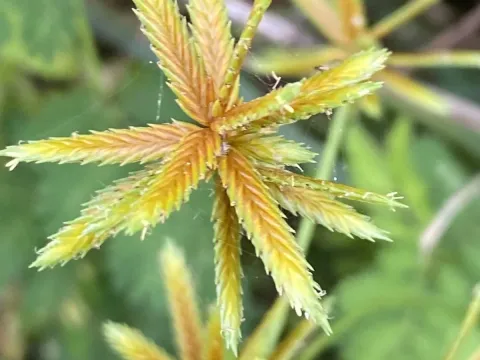
Cyperus oxylepis
Cyperus oxylepis
Cyperus oxylepis is a perennial herbaceous plant belonging to the Cyperaceae family. It is typically found in wetland environments, coastal regions, and saline soils where few other crops can thrive.
What the section contains
Cyperus oxylepis
The plant thrives in tropical and subtropical climates, exhibiting significant resilience to fluctuating water levels and temporary inundation. Its biology is perfectly adapted to riparian habitats.
Botanical characteristics include a well-developed root system, which anchors the plant in soft, waterlogged substrates, and distinct, sharp-scaled inflorescences that give the species its unique appearance.
Soil requirements focus on high moisture levels and adequate organic content. Notably, this species has evolved a high tolerance for salinity, allowing it to occupy niches that are marginal for conventional agriculture.
Agronomic management requires precise water level control. Maintaining consistent soil moisture is essential for optimizing biomass production while ensuring that oxygen reaches the roots effectively during the growth phase.
While not a traditional industrial crop, Cyperus oxylepis has potential for local agricultural use. It can be harvested for green manure, animal forage, or biomass-based compost products.
Productivity is largely dictated by nutrient availability and sunlight exposure. In nutrient-rich alluvial soils, the plant shows rapid regrowth potential, enabling multiple harvests within a single growing season.
Quantifying yield remains challenging as most populations are managed as part of natural ecosystems. However, sustainable harvesting practices suggest significant biomass potential in humid environments.
The organic matter produced by this sedge is highly valued for its ability to improve soil structure when incorporated as green manure, providing essential nutrients to subsequent crops.
Future agricultural applications may include using the plant for phytoremediation, as its ability to absorb minerals makes it a candidate for managing saline or degraded agricultural lands.
The primary threats to Cyperus oxylepis include fungal infections like rust and various leaf spot diseases, which typically emerge in stagnant, highly humid conditions with poor air circulation.
Pests such as stem-boring insects and specific larvae can impact growth density. Managing these pests in aquatic environments requires strategies that avoid disrupting the local hydrological balance.
Integrated pest management, focusing on cultural practices rather than chemical treatments, is recommended to preserve the safety of the surrounding water resources.
Regular monitoring of the foliage is essential to detect early symptoms of disease. If spots or yellowing occur, thinning the planting density is the most effective corrective action.
Finally, competition from invasive aquatic weeds during the early establishment phase can severely stunt the growth of young sedge populations, requiring careful manual weeding.