
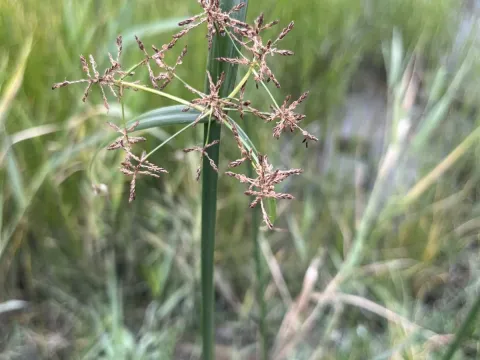
Cyperus malaccensis
Cyperus malaccensis
Cyperus malaccensis, commonly known as Shichito mat rush, is a perennial aquatic plant belonging to the Cyperaceae family. In industrial farming, it is primarily propagated vegetatively by dividing rhizomes, which ensures the establishment of a uniform and vigorous plantation from the very beginning.
What the section contains
Cyperus malaccensis
The optimal planting time is in the spring, once the soil has warmed up and the risk of late frosts has passed. Early to mid-spring allows the plant enough time to establish a strong root system before the onset of the hottest summer months, which is crucial for maximizing biomass yield.
Rhizomes are planted at a depth of approximately 10 to 15 centimeters. Spacing must be carefully managed to ensure each plant has adequate access to nutrients and water, while also allowing enough space for manual or mechanical weeding during the initial establishment phase of the crop.
Soil preparation is a foundational step in successful cultivation. The land should be tilled to a fine tilth and enriched with organic matter. Proper drainage control is essential, as while the plant loves moisture, stagnant water conditions must be manageable to prevent root decay in young plants.
In well-managed fields, the plant quickly forms dense clusters that effectively shade out competition. During the first year, however, weed management is a critical task. Protecting the crop from invasive species early on ensures that resources are directed entirely toward the growth of the desirable stems.
Cyperus malaccensis is an obligate hydrophyte, meaning it requires consistently high levels of soil moisture for optimal development. It is naturally adapted to river deltas and marshy areas, and commercial plantations often utilize controlled irrigation or flooding to mimic these native conditions.
Sunlight is a major limiting factor for growth. The plant requires full sun exposure to reach its maximum height and produce strong, resilient stalks. Areas with significant shading will result in stunted, overly thin stems that lack the durability needed for the weaving and textile industries.
Temperature requirements generally fall within the range of 20 to 30 degrees Celsius. As a plant of subtropical and temperate Asian origins, it thrives in warm, long growing seasons. It can tolerate some degree of temperature fluctuation, but prolonged cold can significantly hamper its development.
The soil should be rich in organic matter, with a preference for silty or clay-loam textures that can hold significant amounts of water. The pH should ideally be neutral or slightly acidic, which facilitates the optimal uptake of essential nutrients required for strong fibrous growth.
An interesting feature of this species is its salinity tolerance. This makes it a valuable crop for reclaiming or utilizing marginal wetland soils where traditional crops might fail, thereby providing economic utility to areas that would otherwise remain unproductive in a conventional agricultural system.
The yield of Cyperus malaccensis is measured by the volume and quality of its mature stems, which serve as a renewable natural fiber source. With intensive farming practices and consistent water management, a healthy plantation can produce a substantial annual yield of harvestable biomass.
The main product is the long, cylindrical culm, which is highly valued for its exceptional tensile strength and flexibility. These fibers are traditionally used in the production of tatami mats, artisanal flooring, baskets, and various eco-friendly interior decorations that remain highly sought after.
A well-maintained plantation can remain productive for many years, significantly reducing the cost of annual replanting. Once the crop is established, annual harvesting and proper field management allow the plants to regenerate and maintain stable yields throughout the lifespan of the plantation.
Quality control is vital for maximizing market value. Premium stems are characterized by their uniform diameter, lack of blemishes, and consistent green color during harvest. Careful sorting after the harvest allows farmers to grade their products and target different segments of the manufacturing industry.
Future yield improvements are largely focused on selecting and breeding varieties with faster growth cycles and higher fiber density. Advances in precision irrigation and soil nutrient monitoring are also enabling farmers to achieve better results while minimizing the environmental impact of cultivation.
Fungal pathogens represent the most significant threat to Cyperus malaccensis, particularly in environments with poor air circulation or excessive, stagnant humidity. Leaf spots and stem rot can rapidly degrade the quality of the fiber, making early detection and intervention essential.
Insect pests that target the soft core of the stalks can cause substantial damage. Farmers should monitor fields regularly for signs of infestation. Whenever possible, biological pest control methods are preferred to maintain the natural integrity and ecological branding of the harvest.
Invasive weed species compete fiercely for nutrients, especially in the first season of planting. If left unchecked, they can cause significant yield loss. Mechanical weeding or careful water level management is often used to suppress weed growth without the need for excessive chemical intervention.
Abiotic stresses, such as extreme water level fluctuations or sudden shifts in temperature, can lead to physiological distress. While the plant is hardy, prolonged droughts or flooding events that exceed its tolerance threshold can weaken the rhizomes and decrease the longevity of the crop.
Disease prevention is primarily achieved through good agricultural practices. This includes ensuring proper plant spacing, maintaining good water quality in the irrigation system, and implementing a sanitation program where debris and old plant matter are removed to prevent disease cycles.
Harvesting usually takes place in late summer or early autumn, when the stems have reached their peak maturity. Timing is critical: if harvested too early, the fibers lack strength; if left too long, the stems become woody, brittle, and lose the flexibility required for weaving processes.
The harvesting process involves cutting the stems near the base. While manual harvesting with sickles allows for high selectivity and protects the regrowth of the rhizomes, large-scale commercial operations may utilize specialized cutters to expedite the process and manage labor costs.
Immediately after cutting, the stems are bundled and prepared for drying. This is an essential step in post-harvest processing. Drying is typically conducted in open-air sheds or fields under sunlight, ensuring good ventilation to preserve the color and flexibility of the harvested fiber.
Proper storage is the final key to maintaining product quality. Once dried, the stalks must be kept in a dry, well-ventilated space to prevent moisture absorption. Even slight exposure to humidity can trigger mold growth, which permanently damages the fibers and destroys their market value.
Final preparation before market distribution involves trimming the stalk ends and bundling them into standardized sizes. This uniformity is highly valued by manufacturers, who rely on a consistent supply of quality fibers to keep their production lines efficient and their output of consistent quality.