
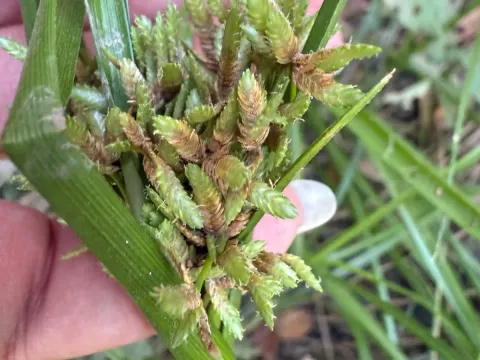
Cyperus ochraceus
Cyperus ochraceus
Cyperus ochraceus is not a cultivated agricultural crop. Instead, it is recognized primarily as a weed or wetland plant. Therefore, there are no standard sowing or planting practices associated with it in commercial farming.
What the section contains
Cyperus ochraceus
In natural ecosystems, reproduction occurs via rhizomes and seed dispersal through water currents. The plant thrives when soil moisture levels are consistently high, making it a common sight in poorly drained areas.
Management of this species is focused on eradication rather than cultivation. Farmers typically address its presence through mechanical soil disturbance before the plant reaches its peak reproductive phase in late spring.
The life cycle of the plant is highly dependent on ambient temperatures. Rapid vegetative growth usually begins when soil temperatures rise above 15 degrees Celsius, allowing the plant to spread effectively via its underground stems.
Understanding the biological development of Cyperus ochraceus allows producers to implement preventative measures. Eliminating the plant before seed set is vital to preventing the spread of the species to other parts of the field.
As a member of the Cyperaceae family, Cyperus ochraceus is an obligate wetland species. It prefers moist, saturated soils and is frequently found along irrigation channels, stream banks, and in fields with inadequate drainage.
The species demonstrates a high tolerance for varying soil textures, including heavy clays and silt. It excels in environments where water remains stagnant, utilizing such conditions to outcompete other less resilient plant species.
Sunlight availability is a primary factor influencing its density. While it can withstand periods of shade, it produces the most aggressive growth in open, sunlit areas, which is why it often dominates disturbed wetlands.
From an agricultural standpoint, managing Cyperus ochraceus requires long-term water management strategies. Improving the subsurface drainage of a field effectively renders the environment unsuitable for its sustained growth.
The plant is not highly sensitive to pH levels, allowing it to colonize a wide variety of habitats. However, its main limiting factor remains the availability of constant moisture within the root zone.
Cyperus ochraceus acts as a host for several pathogens that may impact surrounding crops. The damp environment it creates often encourages the development of rusts and mildews, which can spread to nearby vegetable or grain crops.
Various insect pests, particularly those from the order Hemiptera, frequent these sedges. These insects can serve as vectors for viruses that pose a significant threat to nearby agricultural monocultures.
Nematode populations often flourish in the root zones of Cyperus ochraceus. These parasitic worms can persist in the soil even after the sedge is removed, complicating subsequent crop rotations and plant health management.
Effective management requires monitoring for signs of stress or infection in the weed population. Reducing the density of this plant reduces the overall phytosanitary risk to the field.
- Susceptibility to fungal rusts.
- Risk of hosting virus-carrying insects.
- High potential for harboring harmful soil nematodes.