
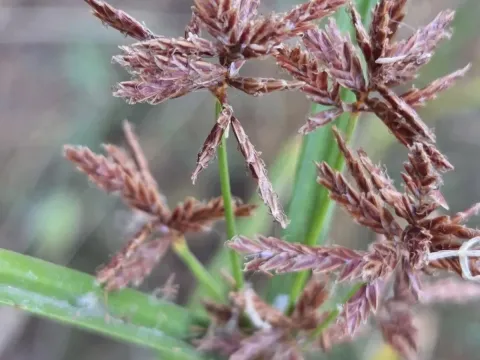
Galingale
Cyperus longus
Galingale (Cyperus longus) is a perennial herbaceous plant belonging to the Sedge family (Cyperaceae). In its natural habitat, it is commonly found in wetlands, riverbanks, and marshy areas, thriving in the temperate climates of Europe, Asia, and Africa.
What the section contains
Galingale
The crop has high requirements for soil moisture. For optimal development, Galingale needs areas with a consistently high water table or direct proximity to standing water. The plant is well-adapted to conditions where its root system is partially submerged in water.
Regarding soil composition, the species is relatively undemanding, but it produces maximum biomass on fertile silty or loamy soils. A neutral to slightly acidic soil pH is ideal for maintaining vigorous growth of the aerial parts.
In terms of agricultural practice, it is crucial to provide the plant with sufficient sunlight, although it can tolerate light shading. In northern regions, protection against deep soil freezing is necessary, as the rhizomes develop best in warmer conditions.
The economic use of the culture includes landscape design for the margins of artificial ponds and the use of its strong, long stems as weaving material. In some regions, Galingale is valued as a source of biomass for wastewater treatment.
The plant possesses high natural resistance to most agricultural pathogens due to its specific aquatic habitat. The main threats are fungal diseases that arise from water stagnation, poor aeration, or the accumulation of rotting plant debris.
Among pests, insects that feed on the soft stem tissues, such as leaf miners or certain aphid species, are the most frequent, especially during drier spells. Rodents inhabiting riparian zones may also cause damage to the rhizomes.
A critical risk factor is excessive encroachment by other invasive weed species, which can outcompete Galingale for light and dissolved nutrients. Regular clearing of the cultivation area is essential to minimize such competition.
Chemical treatments are rarely used because the crop is often planted near open water bodies. When pest management is required, biological control methods are highly preferred to avoid polluting the water source.
Disease prevention consists mainly of maintaining appropriate planting density and monitoring the water quality to ensure a healthy growing environment for the rhizomes.