
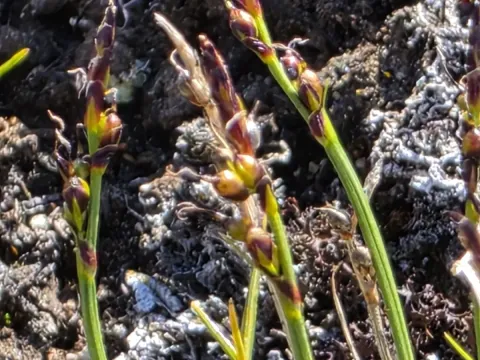
Glacial sedge
Carex glacialis
Glacial sedge (lat. Carex glacialis) is a perennial herbaceous plant belonging to the Cyperaceae family. It is a highly specialized species adapted to the rigorous climates of the Arctic and alpine zones, functioning effectively within fragile ecosystems.
What the section contains
Glacial sedge
Botanically, this species is characterized by the formation of dense tussocks or mats. This growth habit serves as an evolutionary strategy to survive in nutrient-poor substrates and provides protection against harsh wind abrasion typical of its native northern habitats.
The natural range of the species encompasses the high-latitude regions of Eurasia and North America. From an agricultural standpoint, it serves as a critical component of pastureland in subarctic regions, providing essential forage where few other vegetation types can persist.
Regarding soil requirements, glacial sedge thrives in well-drained, stony, or sandy environments. It is remarkably resilient to extreme cold but requires a balanced moisture regime, specifically avoiding waterlogged conditions, which are contrary to its native alpine or tundra-based environment.
The primary economic use for this species is as a grazing resource for livestock and wild ungulates, particularly reindeer. Its ability to initiate growth immediately following the snowmelt makes it a vital source of early-season nutrition for northern farming systems.
The main threats to the survival and productivity of Carex glacialis include habitat loss due to industrial development in the Arctic and climate-induced changes in soil structure, which threaten the delicate permafrost layer it relies upon.
Typical pests are rare in such extreme climates, although occasional outbreaks of leaf-feeding insects or fungal pathogens may occur if micro-climatic conditions become excessively humid during the short summer growing season.