
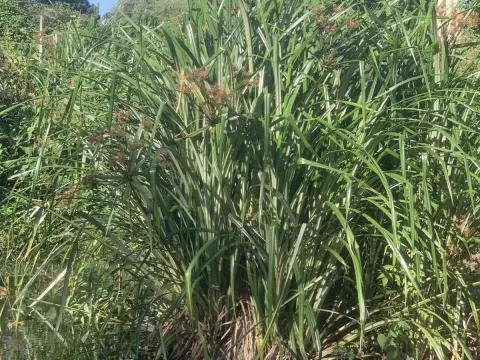
Giant papyrus
Cyperus immensus
The giant papyrus is a perennial rhizomatous plant, meaning its propagation in agricultural settings is most efficiently achieved through vegetative methods, such as division of the rootstock or planting rhizome segments. The ideal planting time occurs when soil temperatures are consistently warm, and the risk of frost is completely eliminated.
What the section contains
Giant papyrus
Planting material must be prepared carefully: rhizomes should be cleaned of any decayed sections and planted at a depth of 10-15 centimeters into a prepared, moist substrate. It is essential to maintain proper spacing between plants to accommodate the species' tendency for rapid horizontal spread.
In regions with distinct seasonal changes, planting is best performed in the spring, allowing the plant to establish a robust root system before the onset of the winter dormancy period. When using seeds, propagation is conducted in controlled greenhouse conditions with subsequent seedling transplanting.
Ensuring stable soil moisture is critical immediately after planting to prevent the drying of the topsoil layer. Rapid development of aerial biomass typically begins within three to four weeks of successful establishment.
This crop does not require frequent transplanting and remains productive in a single location for several years, provided that nutrient levels in the soil are regularly replenished through fertilization.
The giant papyrus belongs to the Cyperaceae family and is a characteristic hydrophyte that requires abundant moisture. In its natural habitat, the plant thrives in tropical and subtropical zones, commonly found along the margins of water bodies and in swampy lowlands.
For optimal growth, the crop requires highly fertile, loamy, or silty soils rich in organic matter. The plant is extremely sensitive to drought and prolonged drying of the root zone, which can result in a total cessation of vegetation.
The ideal temperature range for this species varies from +20 to +30 degrees Celsius. As a light-loving plant, it should be situated in open, well-illuminated areas protected from strong, cold winds to achieve maximum biomass yield.
Maintaining soil pH in the slightly acidic to neutral range is a critical aspect of proper agrotechnics. Saline soils are highly detrimental to the development of the root system of this species.
In temperate climates, the plant necessitates winter protection or must be moved to heated facilities, as it possesses very low cold tolerance and cannot survive freezing conditions.
The primary economic use of the giant papyrus is the production of high-quality plant fibers, which are utilized in weaving and the manufacturing of environmentally friendly packaging materials.
Biomass yield is directly proportional to the quality and consistency of irrigation, as well as the levels of nitrogen nutrition provided during the active growth phase. Under intensive cultivation practices, multiple harvests per season may be achieved.
The rhizomes are also of commercial value, as they contain specific biologically active compounds utilized in pharmacology and traditional medicine within various regions of its native range.
To maximize fiber quality, plants should be harvested at the onset of the flowering phase, when stalks reach peak strength and elasticity before becoming excessively woody.
Regular application of balanced mineral fertilizers significantly improves the yield of dry biomass per unit area, making the cultivation of this species economically viable for sustainable fiber production.
Despite its high tolerance for excessive moisture, the giant papyrus is susceptible to fungal diseases, such as root rot, which typically occur due to poor soil aeration and stagnant water conditions.
Among pests, insect larvae that damage the root system pose the greatest threat, while various aphid species frequently attack the succulent young shoots during hot weather periods.
Disease management involves preventative treatments with broad-spectrum fungicides, particularly in high-humidity environments that facilitate the rapid spread of fungal spores.
A crucial element of crop protection is the strict phytosanitary control of planting material before plantation establishment to prevent the introduction of pathogens from infected areas.
The use of biological insecticides is preferred, as this allows the resulting plant material to be used in clean, eco-friendly industrial manufacturing processes.
Harvesting the giant papyrus can be carried out either through mechanized equipment or manual labor, depending on the scale of production and the intended end-use of the raw material.
For textile purposes, the stalks are cut as close to the base as possible, followed by primary processing steps including sorting, drying, and eventual retting to separate the fibers.
The harvesting window is strictly limited to the vegetative phase; once the plant reaches the fruiting stage, the stalks become coarse and lose the desirable quality characteristics required for industrial applications.
Post-harvest, the soil should be loosened, and supplemental fertilization may be applied to support the recovery of the parent plants for the subsequent growing cycle.
Storage of the processed dry raw material must occur in well-ventilated, low-humidity environments to prevent mold growth and the loss of fiber structural integrity.