
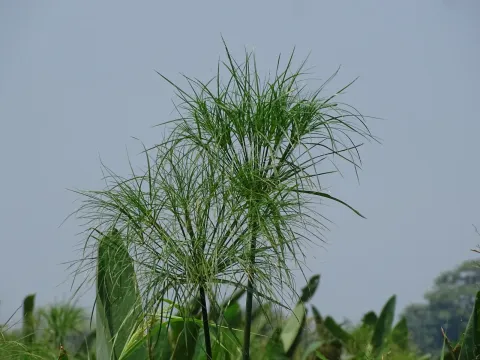
Giant papyrus
Cyperus giganteus
Giant papyrus (Cyperus giganteus) is a significant perennial species within the Cyperaceae family. Known for its massive, reed-like structure, this plant thrives in aquatic and semi-aquatic environments, serving as an important ecological and industrial resource.
What the section contains
Giant papyrus
The species originates from tropical America, where it grows in river deltas and marshlands. Its natural habitat is characterized by constant water saturation, allowing the plant to develop a deep, extensive rhizome system that anchors it securely in soft, muddy soils.
Cultivation requires specific environmental parameters, primarily high levels of ambient heat and moisture. It is strictly a tropical plant, meaning it cannot tolerate frost or prolonged cold periods, which typically lead to dormancy or the total death of the foliage.
Regarding soil requirements, the crop favors nutrient-rich silty or organic soils found in low-lying areas. Proper agricultural management involves maintaining a high water table throughout the growing season to ensure optimal physiological function and biomass accumulation.
A typical cultivation cycle involves the fragmentation of mature rhizomes, which are then planted in prepared wet beds. Once established, the plants form dense stands that require minimal weeding due to their competitive nature and rapid rate of vegetative spread.
The industrial application of giant papyrus is centered on its use as a source of fiber for paper production and handicrafts. Its long, sturdy stems are harvested for their tensile strength and durability, making them suitable for weaving baskets, mats, and construction materials.
Harvesting is usually performed at the end of the vegetative peak when the cellulose content in the stalks is at its maximum. Stems are manually harvested using sickles or specialized harvesting machinery, followed by immediate field drying to prevent degradation of the natural fibers.
While the giant papyrus is generally robust, it can be susceptible to fungal pathogens if grown in stagnant water with poor circulation. Additionally, while insect damage is rare due to the plant's high silica content, invasive weeds can challenge young stands if the water level is not managed properly during the initial growth phase.