
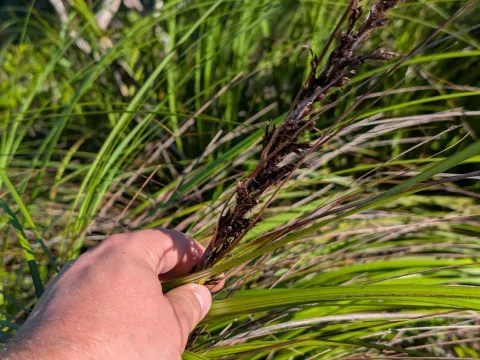
Gahnia
Gahnia
Gahnia is typically propagated through division of the root clump in early spring, which allows the plant to establish itself before the heat of summer.
What the section contains


Gahnia
Seed germination is possible but generally slow and requires specific environmental conditions, making it less favorable for large-scale agricultural or garden use.
When planting, it is crucial to select a site that provides ample space, as mature specimens can develop a substantial root system and spread significantly.
Young plants should be spaced according to the specific cultivar's growth habit to ensure adequate air circulation and prevent competition for resources.
Initial establishment requires consistent moisture, although once fully settled, many species of Gahnia exhibit impressive drought tolerance.
As a member of the Cyperaceae family, Gahnia is characterized by its tough, often serrated foliage that forms dense clumps, widely distributed in tropical and temperate regions.
These plants thrive in full sun, which is essential for maintaining the structural integrity of their leaves and the aesthetic appeal of their inflorescences.
Soil conditions should be well-drained and slightly acidic to neutral; the plant does not tolerate waterlogged sites which are prone to root suffocation.
The climate requirements for Gahnia generally favor warm to temperate environments, as extreme frost can cause significant damage to the foliage.
Maintenance involves routine grooming to remove dry or damaged leaves, which not only keeps the plant tidy but also discourages pests and disease accumulation.
Harvesting for floral use involves cutting the mature seed heads or inflorescences when they reach their peak architectural state during late summer or autumn.
Using clean, sharp shears is necessary to make precise cuts at the base of the stems, ensuring that the remaining plant remains healthy and vigorous.
For dried arrangements, the harvested stems should be air-dried in a shaded, ventilated area to prevent the colors from fading and to maintain their rigid structure.
While not a traditional agricultural crop, the periodic removal of older, woody foliage is an essential harvest-like practice for maintaining the plant's health.
Strategic harvesting of spent inflorescences can also prevent self-seeding, which is beneficial if you wish to control the plant's population in a garden design.
Root rot remains the primary threat to Gahnia, often triggered by excessive soil moisture and poor drainage, especially during the wetter winter months.
Fungal leaf spots can occur when humidity levels are excessively high and air movement around the foliage is restricted, leading to diminished aesthetic quality.
In terms of pests, spider mites and mealybugs can pose a risk in greenhouse environments or during periods of prolonged drought, requiring vigilant monitoring.
Physical damage to the root system during cultivation can introduce pathogens, which is why minimal soil disturbance is recommended around established clumps.
Implementing a proper sanitation program, which includes cleaning tools between plants, is the most effective defense against the spread of potential diseases.