
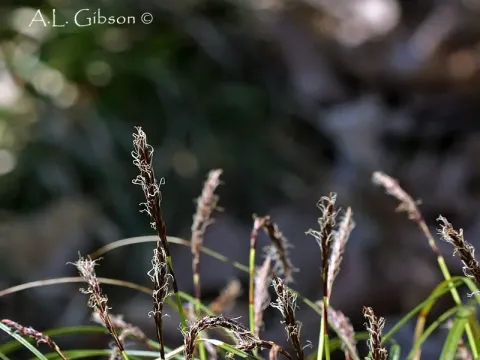
Lanceolate sedge
Carex lanceolata
Carex lanceolata, commonly known as lanceolate sedge, is a perennial graminoid belonging to the Cyperaceae family. In agricultural and horticultural contexts, the primary method of propagation is vegetative division of the root clumps during the spring or early autumn months.
What the section contains
Lanceolate sedge
Propagation from seed is technically feasible, though it requires a period of cold stratification to ensure high germination rates. Seeds should be sown on the soil surface, as they require light to germinate effectively, and kept consistently moist throughout the process.
When planting, spacing should be determined by the intended density of the ground cover. Typically, a distance of 30 to 45 centimeters between plants allows for optimal spread and ensures that individual clumps develop into a uniform mat without excessive competition.
Successful establishment relies on ensuring the soil temperature is adequate at the time of sowing or planting. Early spring remains the preferred time for installation to allow the root system to settle before the heat of the summer months.
The plant demonstrates a robust growth habit once established, forming dense, cushion-like clusters. This structural characteristic makes it highly effective for rapid landscape integration and long-term soil stabilization projects.
Lanceolate sedge is highly adaptable to various lighting conditions, thriving in partial shade to full sun. While it shows remarkable tolerance to a wide range of soil textures, it performs best in well-draining, humus-rich loams that retain sufficient moisture.
Regarding climatic requirements, Carex lanceolata is exceptionally hardy and capable of surviving significant winter temperature fluctuations without protection. Its native distribution across East Asia underscores its preference for temperate, forest-edge environments.
Water management is crucial during the initial growth stages; however, once established, the plant exhibits a moderate level of drought tolerance. It is essential to prevent waterlogged conditions, which may impede root respiration and stunt overall development.
Maintenance requirements are minimal compared to other agricultural crops. Occasional removal of weeds is advised during the first season, after which the sedge's density usually suppresses competing vegetation effectively.
For optimal aesthetic performance, annual fertilization with a balanced, slow-release fertilizer in early spring is recommended. This practice encourages vigorous foliage production and maintains the plant's characteristic deep green coloration.
The economic value of Carex lanceolata is centered on its utility as an ornamental and functional ground cover. It is particularly valued in erosion control applications, where its intricate and deep root systems stabilize slopes and embankments.
Productivity in nursery settings is measured by the rapid multiplication of healthy divisions. The plant's ability to remain stable for many years makes it a reliable asset for large-scale municipal or private landscape projects.
The species serves as a critical component in ecological restoration, providing habitat and soil protection. Its durability against environmental stressors reduces the need for frequent replanting, enhancing its cost-effectiveness over long-term usage cycles.
In landscaping, the yield of "visual value" is high due to its ability to retain green foliage for extended periods. This characteristic contributes to its popularity in winter-season landscape design where structural elements remain important.
The plant does not require high levels of chemical inputs, which contributes to sustainable land management practices. This makes it an attractive option for environmentally conscious agriculture and landscape development.
Carex lanceolata is notably resistant to most common agricultural diseases. However, high humidity and lack of airflow can occasionally predispose the plant to fungal leaf spot infections, which should be managed through improved ventilation.
Pests such as spider mites may appear during prolonged hot and dry periods. Regular inspection of the undersides of leaves is recommended for early detection, with mite outbreaks managed via targeted acaricides or neem oil applications.
Root rot is primarily a symptom of poorly drained, compacted soils rather than a primary disease vector. Improving the physical properties of the soil profile is the most effective preventative measure against such complications.
Dense planting schemes can sometimes lead to localized fungal development if air movement is restricted. Maintaining recommended plant spacing is a fundamental strategy for preventing the spread of any potential pathogens.
Overall, the plant is considered low-maintenance, with the majority of health issues arising from environmental mismanagement rather than biological susceptibility. Proper site selection remains the best defense against threats.
Harvesting for propagation involves carefully lifting the parent clump and separating it into smaller divisions, each containing an adequate root structure and multiple growing points. This is best executed during the dormant season or early spring.
Sanitation is a vital aspect of maintenance; removing old or damaged foliage in early spring allows the plant to channel energy into the production of fresh, vibrant growth. Sharp, sanitized shears should be used to ensure clean cuts.
The foliage collected during maintenance can be repurposed as organic mulch, providing nutrients back to the soil after decomposition. This circular approach minimizes waste and contributes to the overall health of the garden ecosystem.
No formal "harvest" for commodity purposes is applicable for this species, as its primary value remains in situ. The timing of grooming and division is the only temporal element required for effective crop management.
Post-maintenance care involves light watering and potentially a mild nutrient boost to accelerate recovery. This ensures the plant quickly resumes its role as a decorative and functional feature in the landscape.