
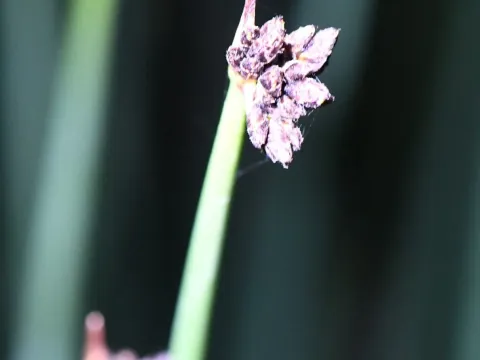
Lake clubrush
Schoenoplectus lacustris
Lake clubrush is typically propagated vegetatively by dividing rhizomes, which serves as the most efficient method for establishing commercial stands. The optimal planting period is during early spring when water and bottom sediment temperatures rise to at least 10–12 degrees Celsius.
What the section contains
Lake clubrush
For seed-based propagation, seeds are sown in prepared nursery substrates under controlled greenhouse conditions in early spring. Seedlings require constant high humidity and are transplanted to their permanent site only after achieving active growth, usually by mid-summer.
The planting density is determined by the specific goal of the cultivation. For phytoremediation purposes, a density of 5 to 10 plants per square meter is recommended to ensure rapid surface coverage and effective nutrient uptake from the water.
In industrial-scale operations, specialized equipment is used to plant rhizomes into muddy substrates. Proper anchoring in the sediment is crucial to prevent the plants from being dislodged by water currents or consumed by aquatic wildlife during the initial establishment phase.
Maintenance during the first year is vital. Constant water level management is necessary to prevent the root system from drying out, which can lead to plant mortality before the culture becomes fully established and resistant to environmental stressors.
Lake clubrush, a member of the Cyperaceae family, is a perennial hydrophyte naturally occurring in shallow waters with slow currents. It thrives in depths ranging from 20 to 100 centimeters, providing a stable, submerged environment for its expansive rhizome network.
The plant is highly adaptable but shows superior growth in fertile silty or peaty soils rich in organic matter. Its ability to accumulate nitrogen and phosphorus makes it an excellent candidate for constructed wetlands and phytoremediation of agricultural wastewater.
Climate adaptability is one of the plant's greatest strengths, as it tolerates wide temperature fluctuations. In temperate regions, it survives winter freezing of water bodies, remaining dormant until the spring, provided the rhizomes are not frozen into solid ice.
Full sunlight is a major requirement for healthy development. Shading significantly hampers photosynthesis and results in lower biomass yields. Therefore, it is important to select sites without significant canopy cover or nearby structural obstacles.
Water quality parameters, such as pH (ideally 6.5–8.0), are essential for optimal growth. While the plant can tolerate some salinity, high concentrations of heavy metals or toxic pollutants may limit its utility if the harvested biomass is intended for animal feed.
The biomass yield of lake clubrush is largely dependent on the nutrient availability in the bottom sediments and the degree of water eutrophication. Under optimal conditions, productivity can reach 10–15 tons of dry weight per hectare annually.
Regular harvesting is key to maintaining high productivity. By stimulating secondary growth through scheduled mowing, the longevity and vigor of the stand are increased, allowing for multiple years of profitable cultivation without total replanting.
The highest quality of raw material is achieved during the flowering phase. This is the optimal time for harvesting if the biomass is intended for industrial use, such as cellulose extraction, construction material, or high-value animal feed additives.
Productivity metrics are usually higher in controlled biological ponds compared to open natural water bodies. Managed environments allow for precise nutrient dosing and effective competition control, resulting in more uniform and predictable harvest results.
Efficiency in harvesting is driven by the available machinery. Specialized floating harvesters are employed to minimize post-harvest labor costs, ensuring that the biomass is processed quickly to maintain its structural and chemical integrity.
Common diseases affecting lake clubrush are primarily fungal infections that manifest as stem rust or leaf spots. These pathogens thrive in stagnant, high-humidity environments, especially when stands are overly dense and lack proper air circulation.
Pests such as stem-boring larvae and various weevil species pose a significant threat to the culture. By damaging the interior tissue of the stem, these pests weaken the plant, making it prone to wind damage and reducing its structural value for manufacturing.
Sanitation practices are essential for managing health. Removing old, dead vegetation from the previous season is a critical preventive measure to break the life cycle of pathogens and ensure that new shoots emerge in a clean, healthy environment.
Integrated pest management is challenging due to environmental regulations regarding pesticide use in aquatic systems. Therefore, maintaining the ecological balance of the water body and ensuring optimal plant density are the primary methods for natural disease suppression.
Monitoring for signs of disease, such as discoloration or deformities on stems, allows for early intervention. Proactive thinning of the stand can effectively reduce the risk of infection by improving light penetration and ventilation within the canopy.
Harvesting should be timed for the late summer or early autumn when the stems reach peak biomass accumulation and moisture levels are at their lowest. This timing ensures that the stalks are durable and less prone to spoilage during drying.
The cutting height is a critical parameter; at least 10–15 centimeters of the stalk must remain above the water line. This preserves the plant's ability to aerate its rhizomes and store energy, which is vital for overwintering and early spring regrowth.
After cutting, the biomass must be transported promptly to a drying facility. Prolonged immersion in water after cutting leads to rapid decay, reducing the material's value and increasing the risk of contamination from environmental pathogens.
Storage of the harvested material requires well-ventilated conditions to prevent mold. Proper stack management, allowing for continuous airflow, is necessary to preserve the fibers for construction or industrial processing applications.
Proper harvest logistics, including the efficient movement of equipment on water and swift drying, are the final determinants of project profitability. Following these technical guidelines ensures long-term sustainability of the stand for many years.