
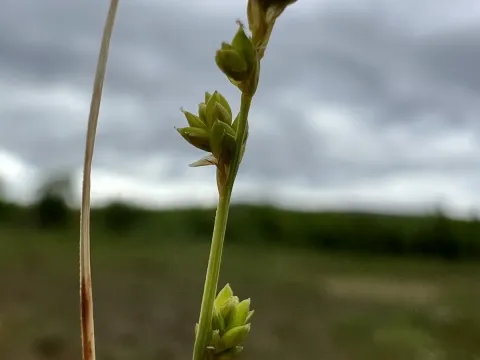
Lappland sedge
Carex lapponica
Lappland sedge (Carex lapponica) is a perennial herbaceous plant belonging to the Cyperaceae family. It is a highly specialized species adapted to the challenging environments of the subarctic and arctic zones, where moisture and cold are the primary limiting factors for vegetation.
What the section contains
Lappland sedge
The plant exhibits a characteristic growth pattern, forming loose turfs that contribute to the stability of peaty soils. Its botanical structure is optimized for nutrient-poor, waterlogged habitats, where it plays a critical role in the natural succession of wetland ecosystems.
Regarding its environmental requirements, the species demands high soil moisture content and thrives in acidic, cold-climate soils. It is sensitive to rapid drying of the substrate and requires consistent water availability throughout the entire vegetative period.
In terms of cultivation, this species is not typically used as a primary agricultural crop, but it is of high interest for ecological restoration and land reclamation projects in northern territories where standard forage grasses fail to establish.
Its resilience to frost and ability to withstand snow cover make it a valuable asset for maintaining ground cover in extreme latitudes, effectively preventing erosion in fragile, saturated environments.
The primary threats to Carex lapponica populations include large-scale drainage projects, which alter the hydrological balance essential for the survival of this water-loving species.
Fungal pathogens, especially those that proliferate in stagnant, humid air, can cause significant damage to the plant's reproductive structures and decrease seed set viability.
Herbivorous insects, such as specialized larvae feeding on sedge foliage, can impact the vigor of the plant, especially in high-density patches where natural predators are scarce.
Climate change poses a long-term threat as rising temperatures facilitate the encroachment of shrubby vegetation and more aggressive grass species, which compete with the sedge for light and resources.
Effective management requires preserving the native hydrological regime and monitoring for indicators of excessive plant competition or environmental stress.