
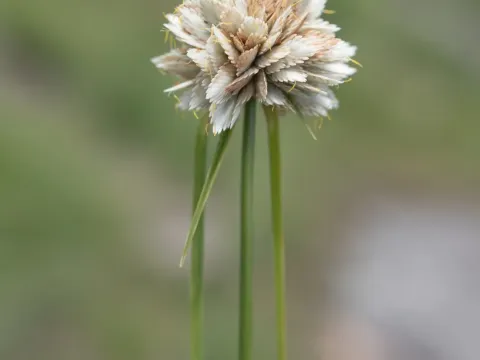
Snowy flatsedge
Cyperus niveus
Snowy flatsedge, known scientifically as Cyperus niveus, is a perennial herbaceous plant belonging to the Cyperaceae family. It is distinct for its white, dense inflorescences that provide a unique aesthetic appeal.
What the section contains
Snowy flatsedge
The native range of this species is primarily within the tropical and subtropical zones of Asia and Africa. It is adapted to open, sun-drenched environments and rocky slopes.
Botanically, it consists of tufted stems with linear leaves emerging from a robust root system. Its ability to thrive in poor soils is one of its most notable adaptive features.
While not a major commercial staple crop, it holds significant value in medicinal traditions where its parts are used for various herbal preparations.
The life cycle is perennial, allowing the plant to persist in stable environments for multiple seasons, provided it receives appropriate care and environmental protection.
Sunlight is the most critical factor for the healthy development of Cyperus niveus. Full exposure ensures compact growth and promotes the formation of flowers.
The soil should be light, sandy, or stony with excellent drainage properties. Waterlogging is detrimental to this species and must be avoided at all costs.
Temperature preferences align with tropical climates, requiring consistent warmth throughout the growing season to reach its maximum yield and health potential.
Moderate irrigation should be practiced, ensuring that the soil dries out slightly between waterings, which helps mimic its natural habitat conditions.
The use of balanced, slow-release fertilizers can enhance vigor, but excessive nitrogen should be avoided to prevent leggy growth that reduces the plant's structural integrity.
Root rot is the primary physiological threat, usually caused by overwatering or compacted soil that fails to drain water away from the root zone efficiently.
Fungal leaf spots can occur under conditions of high humidity combined with poor air circulation, necessitating improved plant spacing and ventilation.
Pests like aphids and spider mites are frequent invaders that target young foliage, which can be managed through biological controls or targeted sprays.
Nematodes in the soil can also pose a persistent threat by weakening the plant from below, leading to stunted growth and yellowing of the leaves.
Integrated pest management strategies are recommended, focusing on maintaining plant vigor through proper site selection and early detection of potential outbreaks.