
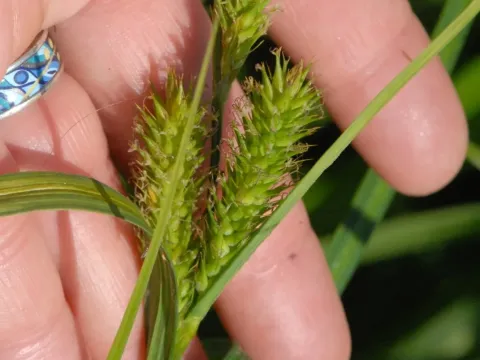
Smooth-beak sedge
Carex atherodes
Smooth-beak sedge, or Carex atherodes, is a perennial plant of the Cyperaceae family that spreads primarily through robust subterranean rhizomes.
What the section contains
Smooth-beak sedge
In agricultural settings, propagation can be achieved by dividing the rhizomes, which is the most reliable method for establishing new plots in wetland areas.
Seed sowing is possible, but it requires cold stratification to break dormancy and must be performed in well-moistened seedbeds to ensure proper germination.
The planting depth should be shallow, ideally no more than 1–2 centimeters, to allow the young shoots to reach the surface before exhausting their seed reserves.
Maintaining a weed-free environment is critical during the establishment phase, as this sedge competes poorly with faster-growing invasive grasses when young.
As a true hygrophyte, Carex atherodes demands high soil moisture content and thrives in saturated soils or shallow standing water conditions.
It is predominantly found in alluvial plains, the margins of ponds, and marshes, where it contributes to the stabilization of aquatic-terrestrial transitions.
The plant is highly resilient to prolonged flooding, which is a key trait that differentiates it from many standard forage grasses that die in hypoxic conditions.
Ideal soil composition consists of nutrient-rich silt or organic-rich muck with a pH range varying from slightly acidic to neutral levels.
Temperature tolerance is high, as the species is adapted to northern temperate climates, remaining dormant in winter and flushing quickly in early spring.
The economic value of this crop is primarily found in its utility as a roughage source for livestock and in ecological restoration projects for erosion control.
Productivity levels are strictly linked to the hydrologic regime, with biomass output peaking in areas with seasonal flooding that provides consistent nutrient influxes.
Forage value decreases significantly as the plant matures; therefore, harvesting must be timed correctly to avoid high silica content in the leaf blades.
When harvested at the correct stage, the hay serves as a functional feed additive, particularly useful in mixed diets for cattle during the winter season.
Additionally, the extensive root systems of this sedge make it an excellent choice for bioengineering, effectively securing embankments against wind and water erosion.
Carex atherodes is generally robust and exhibits significant resistance to many standard agricultural pathogens that plague monocrop cereals.
Fungal infections, such as rusts, can occasionally appear under stagnant, overly humid conditions, which can be mitigated by ensuring minimal airflow through management.
Insect pests are rarely a major issue, though certain specialized beetles or leaf-feeding larvae may occasionally affect the dense foliage in favorable seasons.
The primary threat is the alteration of the water table; excessive drying of the habitat leads to the eventual replacement of the sedge by terrestrial grasses.
Overgrazing poses a structural threat, as constant pressure on the canopy damages the rhizome buds and leads to a decline in plant density over several years.
The optimal harvest window for hay production occurs just as the plant enters the flowering phase, ensuring the best balance of protein and structural fibers.
Mechanical harvesting requires mowing equipment set at an appropriate height to avoid damaging the crown and the uppermost layer of the rhizome system.
Proper curing in windrows is essential, as the high water content of the fresh foliage requires several days of drying to prevent rot and mold growth.
Baling should be performed only when the moisture content is low enough to ensure stability, typically between 15% and 18%, for safe long-term storage.
Regular harvesting cycles can encourage dense regrowth from the rhizomes, effectively managing the field for multiple years of consistent biomass production.