
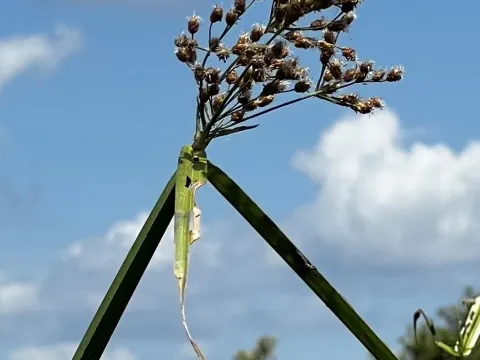
Greater club-rush
Schoenoplectus grossus
The greater club-rush (Schoenoplectus grossus) is a significant perennial aquatic plant belonging to the Cyperaceae family. It is native to tropical and subtropical regions of Asia, typically inhabiting freshwater marshes, lake margins, and shallow wetlands where it thrives in dense stands.
What the section contains
Greater club-rush
Botanically, this species is distinguished by its stout, triangular stems that can reach impressive heights, often exceeding two meters. Its vegetative structure is optimized for life in saturated environments, featuring a robust root system that anchors the plant firmly into the sediment.
Successful cultivation of this crop requires a stable hydroperiod, meaning the water level must be managed to remain constant. The plant thrives in tropical climates with high solar radiation and consistent temperatures, which are essential for maintaining its rapid rate of biomass production.
Regarding soil requirements, the greater club-rush prefers nutrient-rich alluvial or silty soils. It is particularly efficient at extracting nutrients from the water column, which makes it an excellent choice for constructed wetlands aimed at improving water quality through phytoremediation.
Economically, the stems are highly valued in traditional handicrafts, including the production of mats, baskets, and natural building materials. Beyond its commercial utility, the plant plays a crucial role in maintaining local ecosystem stability by providing habitat for various aquatic species.
The plant is susceptible to fungal diseases such as leaf blight, which often manifest in overcrowded or poorly ventilated areas. Maintaining appropriate spacing between plantings is essential to minimize the spread of these pathogens and ensure healthy development.
Pests, particularly lepidopteran larvae and certain aquatic beetles, can cause significant damage to the stems during the growing season. Early detection and the implementation of cultural control methods are necessary to preserve the quality of the harvested fiber.
Invasive weed species can compete with young club-rush plants for light and nutrients. Manual weeding during the early stages of establishment is standard practice, as it protects the delicate young shoots from being smothered by more aggressive aquatic vegetation.
Water quality fluctuations, specifically extreme pH changes or sudden nutrient depletion, can negatively impact plant vigor. Regular testing of the water body used for cultivation is a key step in preventing physiological stress and subsequent vulnerability to secondary infections.
Chemical treatments should be used sparingly and only when strictly necessary, given the plant's aquatic habitat. Integrated pest management (IPM) strategies, which prioritize biological controls and habitat management, are the most recommended approach for large-scale production.