
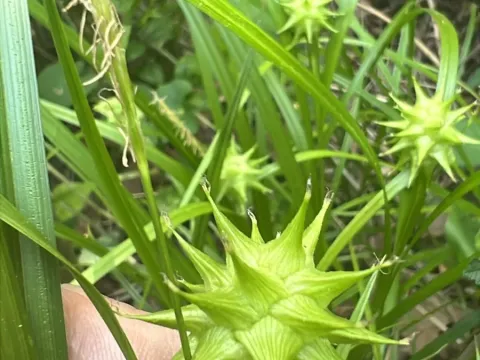
Gray's Sedge
Carex grayi
Gray's Sedge (Carex grayi) is a distinctive perennial plant belonging to the Cyperaceae family. It is native to North America, where it typically thrives in forested wetlands, swamps, and along riverbanks.
What the section contains
Gray's Sedge
The plant is widely recognized for its unique seed heads, which resemble spiked maces or morning stars. It forms dense, arching clumps of bright green foliage, typically reaching heights between 24 and 32 inches during the growing season.
For optimal health, this species requires consistently moist to wet soil conditions. It is an excellent choice for areas with poor drainage or near water gardens, as it tolerates saturated soil better than most typical garden perennials.
It is remarkably cold-hardy, thriving in various temperate climates without the need for winter protection. While it prefers partial shade, it can adapt to full sun exposure provided that the soil moisture levels are maintained throughout the summer.
In terms of usage, Gray's Sedge is a staple in ornamental gardening for water features and rain gardens. Its long-lasting, architecturally interesting seed heads make it a favorite for dried floral arrangements and artistic seasonal decor.
Gray's Sedge is widely considered a low-maintenance plant with high natural resistance to most common plant diseases. It rarely suffers from structural damage caused by fungal infections when grown in suitable conditions.
In conditions with poor air circulation or overcrowding, slight issues with powdery mildew may occasionally occur. Standard horticultural practices, such as proper spacing, are usually sufficient to prevent these issues.
Slugs and snails can sometimes pose a minor threat to the foliage, especially in damp environments where the plant thrives. Gravel mulch can act as a physical barrier to discourage these pests from reaching the foliage.
The plant is generally not susceptible to major insect infestations unless severely stressed by drought conditions. Maintaining a consistent moisture level is the best defense against potential spider mite attacks.
Due to its robustness, chemical pesticide application is almost never necessary for Gray's Sedge, making it an excellent candidate for sustainable or eco-friendly garden landscapes.