
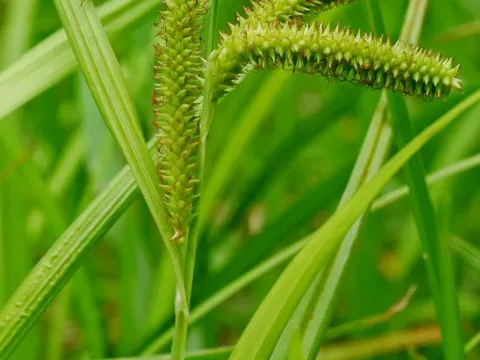
Carex doniana
Carex doniana
Carex doniana is a perennial herbaceous plant belonging to the Cyperaceae family. In the wild, this species is widely distributed throughout East Asia, including Japan, China, and Korea, where it typically inhabits wetlands, riverbanks, and waterlogged environments.
What the section contains
Carex doniana
The plant thrives in well-moistened loamy or sandy soils with a neutral to slightly acidic pH. A crucial factor for optimal growth is consistent moisture availability, as this species is highly sensitive to prolonged drought and deficits in soil water content.
Carex doniana is adapted to temperate climates with sufficient precipitation during the growing season. It exhibits moderate frost resistance and can tolerate temporary flooding, making it a valuable candidate for phytoremediation projects and the stabilization of shorelines.
Botanically, the plant forms dense tussocks consisting of narrow, linear, dark green leaves. The inflorescences are of a characteristic spikelet type, situated on long stalks that rise above the main vegetative layer of the plant.
In agricultural settings, this crop is rarely grown as a monoculture; however, it is considered a promising component for developing forage pastures in high-moisture soils or as a biomass resource in specific ecological restoration projects.
The primary threats to Carex doniana stands are fungal diseases that emerge in stagnant water conditions, such as leaf rust and various types of leaf spots that infect foliage when air circulation is poor.
Common pests include herbivorous insects, specifically caterpillars and aphids, which can infest the dense foliage and developing inflorescences during the active growth phase, potentially reducing plant vigor.