
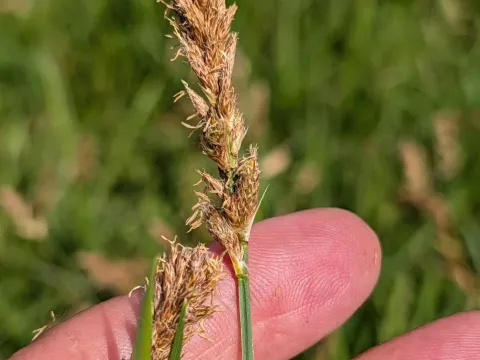
Carex disticha
Carex disticha
Carex disticha, commonly known as brown sedge or soft-leaf sedge, is a perennial herbaceous plant belonging to the Cyperaceae family. It is characterized by long, creeping rhizomes that allow it to form extensive, dense mats in favorable environments.
What the section contains
Carex disticha
The plant reproduces both vegetatively and through seeds. Seed dispersal is often facilitated by water currents, as it thrives in floodplains and marshes. In agricultural contexts, artificial seeding is rarely practiced, as the plant is usually managed as part of natural vegetation.
When establishment is required for restoration projects, seeding is performed in early spring. The seeds are surface-sown or lightly covered, as they require high moisture levels and adequate light to germinate successfully.
Growth begins very early in the season, typically as soon as soil temperatures allow. This provides the plant with a competitive advantage over many other species in the same habitat, enabling it to dominate wet meadow ecosystems.
The biological cycle of Carex disticha is closely tied to hydrological conditions. It is highly adapted to fluctuating water levels, which makes it a persistent and resilient species in riparian zones across the temperate Northern Hemisphere.
The primary requirement for Carex disticha is consistent soil moisture. It is a hydrophytic species that flourishes in wetlands, marshy meadows, and along the banks of water bodies, tolerating saturated soils that would inhibit other plant life.
It shows broad tolerance regarding soil texture, thriving in everything from heavy clays to organic-rich peat soils. It prefers neutral to slightly acidic pH levels but demonstrates high adaptability to various nutrient profiles in wetland settings.
Carex disticha is a sun-loving plant that achieves maximum biomass in open, well-lit areas. While it can survive under partial shade, its density and vigor are noticeably lower compared to plants grown in full sun conditions.
Nutrient availability is essential for vigorous growth. The plant is particularly responsive to nitrogen and potassium levels in the soil, which promote rapid vegetative development in early spring.
Its cold hardiness is exceptional, allowing the plant to survive severe winter conditions. The deep-reaching rhizomes protect the meristematic tissues from frost, ensuring rapid regeneration once the growing season resumes.
From an agricultural standpoint, Carex disticha is considered a low-value forage grass. Its nutritional quality is highest during the early vegetative stage, after which the silica content increases and palatability for livestock significantly declines.
Yields of dry biomass generally range between 1.5 to 3.0 tons per hectare in established meadows. Productivity is heavily dependent on soil fertility and the duration of seasonal flooding, which dictates the overall vigor of the stand.
Its main utility lies in soil stabilization and environmental management. Because of its massive root system, it is an excellent plant for erosion control along riverbanks, drainage canals, and unstable pond edges.
Forage value for cattle is acceptable only if harvested early. Due to its structural components, it is more commonly used as bedding material or as a component in mixed-hay, provided it is harvested before flowering progresses.
Sustainable use of Carex-dominant meadows requires careful grazing management. Overgrazing can deplete the rhizome reserves, while under-grazing can lead to an accumulation of old, lignified biomass that requires mechanical clearing.
Carex disticha is generally robust, but it can be susceptible to rust fungi in stagnant, humid environments with poor air circulation. These infections can discolor foliage and reduce the nutritional value of the harvested biomass.
Certain insect larvae, particularly those that bore into the stems or damage roots, can cause localized decline. While rarely catastrophic, significant infestations may affect the density and long-term health of the plant population.
As a highly competitive species, it can encroach upon cultivated fields if left unchecked. Its invasive nature in drainage systems often requires mechanical removal or specific herbicide treatments to maintain the functionality of water infrastructure.
Disease prevention in Carex stands relies on maintaining optimal stand density and ensuring adequate water drainage where possible. Regular mowing serves as an effective management tool to remove pathogen-infected tissues and promote healthier regrowth.
Integrated management is necessary where this sedge is considered a weed. Combining mechanical control, such as deep tillage, with moisture management is often more effective than chemical control alone due to the plant's resilient root structures.
Timely harvest is critical when using Carex disticha for feed. The optimal window for cutting is during the late vegetative phase or at the very onset of flowering, before the silica content makes the tissue too tough for livestock consumption.
Mechanical harvesting requires equipment capable of operating in soft or wet terrain. Using high-clearance mowers prevents damage to the sod and protects the rhizome network, ensuring that the plant will recover for the following season.
Drying is the primary challenge due to the high water content of the tissues. Effective haymaking requires multiple turnings and potentially the use of tedders to ensure the moisture levels drop sufficiently to prevent spoilage in storage.
For better preservation of nutrients, ensiling or haylage is recommended over traditional haymaking. This method minimizes the loss of crude protein and vitamins that often occurs during prolonged exposure to sunlight and heat.
Post-harvest management should include removing excess debris from the site. Clearing the old vegetation encourages new growth in the next cycle and helps monitor the plant’s health, ensuring the long-term sustainability of the stand.