
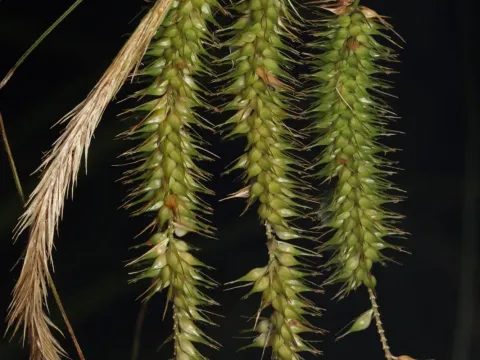
Carex fascicularis
Carex fascicularis
Carex fascicularis, commonly known as tassel sedge, belongs to the Cyperaceae family. It is a perennial herbaceous plant naturally occurring in wetlands, marshes, and along the edges of permanent water bodies.
What the section contains
Carex fascicularis
The plant features a robust root system that helps anchor it effectively in soft or muddy substrates. Its natural adaptation to waterlogged conditions makes it a key species for ecological restoration and bank stabilization projects.
Regarding soil requirements, it thrives in nutrient-rich, moist, and slightly acidic to neutral environments. Consistent water levels are essential for healthy development, as the plant does not tolerate prolonged drought during its active growth period.
Climate needs are centered around moderate temperatures and high atmospheric humidity. Carex fascicularis shows excellent frost tolerance, allowing for successful cultivation in various temperate climates without significant winter damage.
Light availability is crucial for optimal biomass production. While it can survive in partially shaded areas, it reaches its full physiological potential and maximum vigor when grown in full sunlight with adequate water supply.
In agricultural settings, Carex fascicularis is primarily valued for its biomass production. It serves as an alternative feed source for livestock when managed correctly within specialized wetland pasture systems.
Yield efficiency is highly dependent on the hydroperiod and nutrient availability of the site. When managed through sustainable harvesting practices, the plant provides a consistent supply of coarse forage suitable for ensiling.
The industry is increasingly looking at its potential for non-food applications, particularly in the production of cellulose-based fibers. Its ability to grow on lands unsuitable for traditional crops adds significant economic value.
Harvesting requires specialized low-ground-pressure machinery to operate efficiently on saturated soil. Proper timing of the harvest is essential to balance the volume of biomass with the nutritional quality required for end-use.
Future prospects include the integration of this crop into bio-economy models. By harvesting biomass, farmers can simultaneously provide raw materials for industry and improve the filtration capacity of the wetland area.
While generally hardy, Carex fascicularis can be susceptible to fungal infections such as leaf rust when planted at excessive densities or under stagnant water conditions. Proper site management is the primary defense.
Insect pests include occasional infestations of stem-boring larvae or aphids. These usually do not reach economically damaging levels unless the plant is under severe stress or in poor environmental conditions.
Root rot is a specific concern in poorly circulating artificial wetlands. Ensuring fresh, oxygenated water flow is the most effective biological management strategy to keep the root systems healthy and vigorous.
Chemical control is rarely recommended due to the plant's role in water filtration and its presence in sensitive aquatic environments. Instead, focus on cultural practices such as harvesting infected leaves or thinning clusters.
Balanced fertilization is advised to improve resistance to pathogens. Over-application of nitrogen should be avoided, as it leads to overly succulent tissue, making the plant more attractive to pests and prone to fungal attacks.