
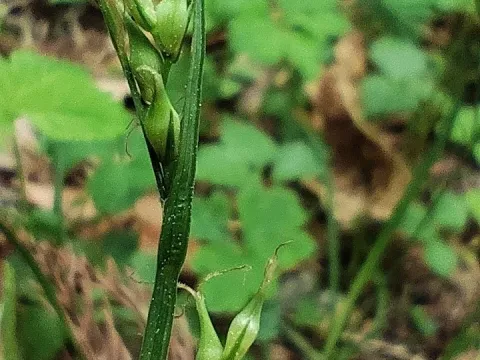
Carex filipes
Carex filipes
Carex filipes belongs to the Cyperaceae family. It is a perennial ornamental grass native to East Asia, specifically regions within Japan and Korea, where it thrives in shaded, cool, and moist woodland environments.
What the section contains
Carex filipes
The plant is highly valued for its fine-textured foliage that forms delicate, arching clumps. It serves as an excellent ground cover or an accent plant in shade gardens, providing a soft, graceful aesthetic that persists throughout most of the growing season.
For optimal growth, this species requires moist but well-drained soil rich in organic matter. A neutral to slightly acidic pH is ideal. Carex filipes prefers partially shaded sites, as direct intense sun exposure can lead to leaf scorch and dehydration.
Maintenance involves consistent moisture management. During hot spells, supplemental irrigation is necessary to prevent the soil from drying out, which can severely stress the plant. Mulching helps retain soil moisture and keeps the roots cool during summer months.
Propagation is most effective through division of the root clumps during the spring. When planting, provide sufficient spacing to allow each clump to expand naturally, ensuring better airflow and reducing the risk of competitive stress.
Carex filipes is generally robust, but it can be susceptible to fungal issues if grown in stagnant, poorly ventilated conditions. High humidity coupled with low airflow often creates a breeding ground for pathogens that affect the foliage.
Pests such as slugs and snails are the most common concern, particularly in the spring when new growth is tender. Keeping the garden floor clear of debris and excessive weeds is a simple yet effective way to discourage these pests from gathering near the plants.
Root rot is a potential danger if the soil remains waterlogged for extended periods. Ensuring a good drainage layer during the planting phase is essential to mitigate this risk, especially in heavy clay-based soils that tend to trap water.
If disease symptoms such as leaf spots or wilting appear, affected parts should be removed and disposed of to prevent further spread. Applying preventive horticultural practices is always more effective than attempting to treat an established infection.
Winter protection is recommended in regions with very low temperatures. Applying a layer of organic mulch around the base of the clump provides insulation for the roots and helps the plant recover quickly once the spring season arrives.