
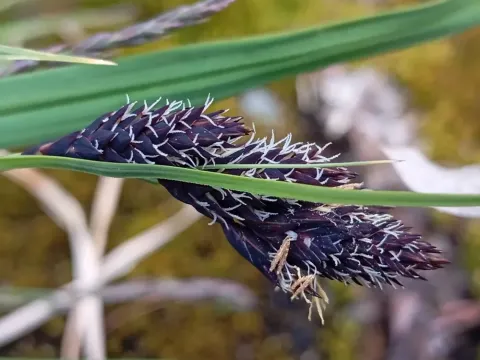
Dark-brown sedge
Carex atrata
The dark-brown sedge (Carex atrata) is a perennial grass-like plant belonging to the Cyperaceae family. It is widely recognized for its preference for alpine and subalpine environments, where it plays a critical role in stabilizing soil on steep slopes.
What the section contains
Dark-brown sedge
Botanically, the species is characterized by dark, almost blackish-brown spikes that emerge from a dense, clump-forming base. These clumps are highly effective at preventing soil erosion, making the plant valuable for environmental restoration in mountain zones.
Successful growth of this species requires a cool, moist climate. It thrives best in well-drained, nutrient-rich soils that maintain consistent moisture levels throughout the growing season, often found near alpine streams or seepages.
The plant demonstrates a strong adaptation to low temperatures and short growing seasons. However, it requires significant sun exposure to produce healthy foliage and reach its full development potential in a cultivated setting.
From an agricultural standpoint, Carex atrata is often utilized as a component of mixed alpine pastures. It contributes to the overall structural integrity of the turf, providing high-quality grazing material for livestock in regions where other forage crops struggle to survive.
Carex atrata is generally resistant to many agricultural pests due to its natural adaptation to harsh, high-altitude environments. However, in lower-lying, wetter cultivation areas, it may face challenges with fungal pathogens.
Rust diseases are the most common threat, often appearing during spells of excessive humidity or poor air circulation. These infections can discolor the foliage and weaken the plant structure over time if not managed properly.
Insects that target sedges, such as certain lepidopteran larvae, can cause localized damage. Despite this, the economic impact is typically minimal unless the plant is cultivated in large, dense stands under sub-optimal conditions.
Preventative management involves maintaining adequate spacing between plants to encourage air movement. Proper irrigation management is also vital to prevent waterlogging, which often acts as a precursor to root rot and other systemic issues.
Biological control and manual removal of infected debris remain the preferred methods for handling outbreaks. Given its environmental sensitivity, minimal chemical intervention is strongly recommended to preserve the local ecological balance of the pasture.