
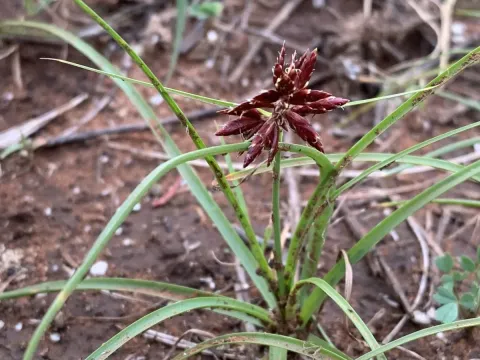
Cyperus usitatus
Cyperus usitatus
Cyperus usitatus is a perennial plant belonging to the Cyperaceae family. It is recognized for its valuable underground tubers, which are utilized in various agricultural and culinary applications.
What the section contains
Cyperus usitatus
Planting typically occurs in the spring, once the soil temperature consistently reaches at least 15-18 degrees Celsius. Early planting in cold soil can lead to delayed germination and potential rot.
For optimal establishment, tubers are placed in rows, ensuring a spacing of approximately 40 to 50 centimeters. This distance provides adequate room for leaf development and facilitates easier access for weeding.
The planting depth should be between 5 and 8 centimeters. Proper depth ensures that the growing tubers are protected from surface fluctuations in temperature and moisture.
A well-prepared seedbed with a fine tilth is essential for uniform emergence. Ensuring the field is free from competitive perennial weeds during the early stages of growth is crucial for successful yields.
The crop performs best in well-drained sandy or loamy soils. These soil types facilitate the expansion of the tubers and ensure they can be easily harvested without excessive soil adherence.
Consistent moisture is required throughout the growing season, particularly during the tuber initiation phase. However, excessive water should be avoided to prevent fungal issues and root deterioration.
Cyperus usitatus is a warm-season crop that thrives in temperatures between 20 and 25 degrees Celsius. Prolonged exposure to cold or frost will severely damage the plant's development.
Sunlight exposure is a limiting factor; the plant requires full sun to maximize photosynthesis and energy storage in the tubers. Shaded areas significantly reduce total production.
Fertilization with balanced organic matter improves soil structure and nutrient availability. Incorporating compost or well-rotted manure before planting is highly recommended for higher productivity.
Soil-borne pests such as wireworms and mole crickets pose the most significant risk to the crop. These pests can damage the skin of the tubers, reducing their market value and storage life.
Root rot, primarily caused by excessive soil moisture and poor drainage, is the most common pathology. Implementing proper water management and field drainage is the best preventative strategy.
Weed competition is a major challenge, especially during the slow establishment phase of the crop. Regular cultivation and mulching are standard practices to keep the field clean of invasive species.
Monitoring for foliage-feeding insects is advised, although the plant typically demonstrates good resistance to most common agricultural pests if kept healthy and vigorous.
Integrated Pest Management (IPM) practices, including proper crop rotation and the use of healthy planting stock, are essential to minimize the need for synthetic pesticides.
Harvesting is conducted late in the season, usually during autumn, when the foliage begins to senesce and turn yellow. This indicates that the tubers have reached peak maturity.
Mechanical harvesting equipment or manual digging tools can be used to lift the tubers from the ground. It is important to harvest during dry conditions to facilitate the cleaning of the produce.
After excavation, the tubers must be cleaned and allowed to dry in a ventilated, shaded area. Removing excess soil prevents the development of mold during the curing and storage process.
Grading by size is often performed immediately after harvest. Larger tubers are generally marketed, while smaller, healthy tubers may be retained for use as planting material in the following season.
Proper storage is essential; the tubers should be kept in a cool, dry, and dark environment to maintain their freshness and nutritional content for an extended period of time.