
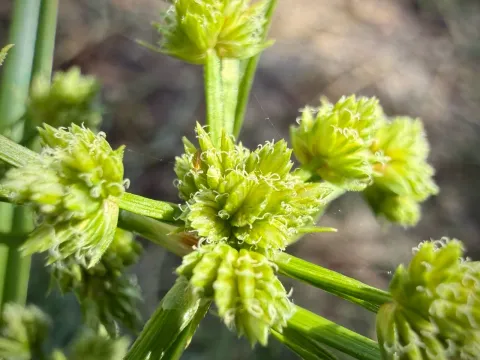
Cyperus virens
Cyperus virens
Cyperus virens, commonly known as green flatsedge, is a perennial herbaceous plant belonging to the Cyperaceae family. It is naturally adapted to wet environments, such as marshes, wetlands, and along the edges of ponds or irrigation channels.
What the section contains
Cyperus virens
The plant is distinguished by its stout, triangular stems that can reach significant heights under favorable conditions. Its root system consists of rhizomes that enable the plant to spread effectively, creating dense clusters that stabilize the surrounding soil.
Optimal growth requires high moisture levels in the soil, as Cyperus virens thrives in hydric conditions. It is tolerant of waterlogged soils where common garden plants would succumb to root asphyxiation, making it an excellent candidate for rain gardens and wetlands.
Exposure to full sun is essential for the plant to reach its full development potential. While it can tolerate partial shade, insufficient light often results in weaker stems and reduced seed production, which may affect the overall density of the population.
In practice, this species is highly valued for its utility in phytoremediation projects and environmental restoration. Its ability to absorb nutrients like nitrogen and phosphorus helps improve water quality in natural and artificial wetland systems.
Fungal pathogens such as rust and leaf spot are the primary threats to Cyperus virens, especially when air circulation is poor. High humidity combined with stagnant air can lead to rapid spread of these diseases across the canopy.
Pests including aphids and mites frequently attack the foliage, particularly during warmer, drier spells. These insects thrive by sucking sap from the tender stems, which can lead to stunted growth and diminished overall vigor if not controlled promptly.
Cultural control, such as thinning out dense growth to improve ventilation, is often the most effective method for preventing disease outbreaks. Chemical treatments should be applied only when necessary, using products safe for aquatic or semi-aquatic environments.
Weed competition during the establishment phase is a significant concern, as young plants may be overshadowed by faster-growing opportunistic weeds. Manual weeding and proper spacing are recommended to ensure the plant establishes a strong root system early on.
Regular inspection is critical for managing potential infestations, especially since damaged leaves can serve as entry points for bacterial or fungal infections. Maintaining consistent soil moisture levels remains the best defense against environmental stress.