
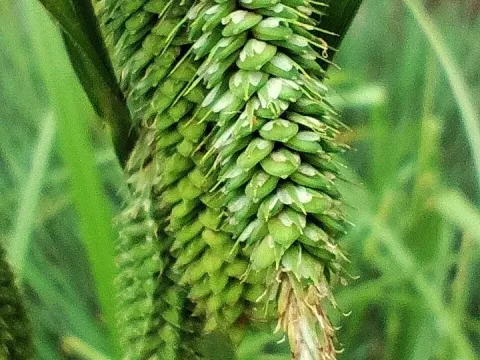
Dimorpholepis sedge
Carex dimorpholepis
Carex dimorpholepis, commonly known as Dimorpholepis sedge, belongs to the Cyperaceae family. It is a perennial grass-like plant native to East Asian wetlands, recognized for its distinct, dual-scaled inflorescences.
What the section contains
Dimorpholepis sedge
The species has very specific cultivation requirements, primarily centered on moisture. It thrives in saturated, nutrient-rich soils and is most successful when grown in boggy conditions or along the margins of ponds and streams.
Climatically, this sedge is highly adaptable to temperate zones. It performs best in full sunlight but maintains acceptable growth rates in partial shade, provided the soil moisture levels are consistently kept high throughout the summer.
Botanically, it features a tufted growth habit and dense, pendulous spikelets. Its root system is fibrous and aggressive, making it an excellent candidate for erosion control on slopes near water bodies.
Economically, it is used primarily in landscape design for water gardens and as a biofilter in phytoremediation projects, where it helps remove excess nitrogen and phosphorus from the water environment.
Dimorpholepis sedge is generally robust, but it can be susceptible to fungal infections such as leaf spot if grown in environments with poor air circulation or stagnant water.
Root rot is the most serious threat, occurring predominantly when the substrate becomes overly compacted or if the pH balance shifts significantly from the optimal range.
Pest issues include occasional infestations by aphids on the tender flower spikes during the late spring, which can stress the plant and reduce its aesthetic appeal.
Integrated pest management strategies should focus on maintaining adequate space between individual plants to promote airflow and keeping the root zone healthy.
Routine maintenance, including the removal of brown or decayed foliage during early spring, serves as an effective prophylactic measure against the buildup of pathogens.