
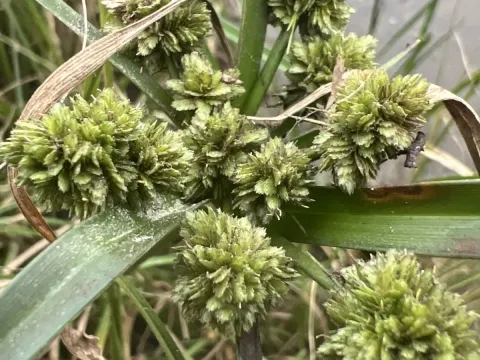
Deep-rooted sedge
Cyperus entrerianus
Deep-rooted sedge (Cyperus entrerianus) is a perennial herbaceous plant belonging to the Cyperaceae family. It is characterized by its triangular stems and dense basal rosettes, which enable the plant to thrive in competitive environments.
What the section contains
Deep-rooted sedge
The native distribution of this species spans the subtropical regions of South America. However, it has been widely recognized as a problematic invasive weed in the Southern United States and other regions with similar humid, subtropical climates.
This sedge has a distinct preference for saturated soils and wetlands. Its physiological ability to tolerate prolonged inundation makes it particularly troublesome in agricultural settings, specifically in paddy fields, drainage ditches, and moist pasture lands.
In terms of growth requirements, the plant shows strong adaptation to various soil types, provided moisture is consistently available. It is capable of rapid biomass production during warm months, which allows it to overshadow and outcompete many native or cultivated plant species.
From an agronomic perspective, Cyperus entrerianus is not a crop but rather a persistent weed. Management requires a multi-faceted approach, as the plant spreads efficiently through both seed dispersal and creeping rhizomes that are difficult to eradicate completely.
The primary threat posed by this species is its aggressive colonization of agricultural lands and natural habitats. Once established, it is extremely difficult to eradicate, often necessitating intensive chemical treatments or significant cultural management practices.
While some specialized insects feed on the sedge, they rarely offer sufficient control to protect agricultural interests. Farmers should monitor fields for early infestation signs to prevent the sedge from forming dense stands that significantly reduce overall field productivity.