
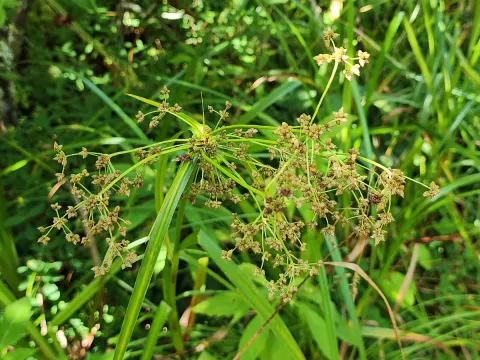
Dark green bulrush
Scirpus atrovirens
Dark green bulrush (Scirpus atrovirens) is a perennial herbaceous plant from the Cyperaceae family. It is widely recognized for its robust rhizomatous growth, which allows it to thrive in saturated, wetland environments across its native North American range.
What the section contains
Dark green bulrush
Propagation is primarily achieved through seeds or rhizome division. For seeding, it is essential to sow in moisture-retentive media in early spring; seeds require light and constant hydration to achieve optimal germination rates.
Rhizome division is the preferred method for establishing large-scale stands. Digging and transplanting rhizome segments in the early spring, before active growth begins, ensures the highest survival rate and faster establishment of the root system.
Correct spacing is crucial; the plant has an aggressive growth habit and will naturally fill in gaps over time. Proper spacing during initial planting allows for uniform development and easier management of the emerging stand.
Moisture control is paramount during the establishment phase. Ensuring that the soil remains saturated or submerged allows the plants to focus energy on root development, which is critical for long-term viability in field conditions.
This species requires high levels of soil moisture and is classified as a hydrophytic plant. It grows best in soils that are consistently damp or saturated, such as those found in marshy areas, along stream banks, or in managed wetlands.
Soil fertility plays a significant role in the production of biomass. Dark green bulrush thrives in organic-rich, silty, or peaty soils that can hold nutrients efficiently while allowing for good gaseous exchange in the rhizosphere.
Sunlight exposure is another key factor for development. While Scirpus atrovirens can tolerate partial shade, it reaches peak productivity in full sun, which enhances stem structure and overall biomass yield.
The plant is highly hardy and adapted to temperate climates, showing excellent cold tolerance during winter months. Its root system remains dormant but protected, allowing for quick regrowth when spring temperatures rise.
- Preference for saturated, wetland soil conditions.
- High tolerance for varying water acidity levels.
- Excellent cold hardiness in temperate regions.
- Superior ability to absorb nutrients, aiding in phytoremediation.
Dark green bulrush is remarkably resilient against most agricultural pests. Its physical structure, characterized by tough leaves and stems, acts as a natural deterrent against many leaf-eating insects.
However, environmental stress, such as stagnant water without movement or improper air circulation, can lead to fungal issues like rust or leaf spots. These are typically managed by ensuring adequate airflow through density control.
While insect damage is minimal, occasional aphid infestations can occur on young, succulent shoots. These are generally managed through cultural practices rather than the widespread application of chemical pesticides.
Weed competition is the most significant threat to establishing a healthy crop. During the first year, it is vital to keep the area clear of aggressive invasive species that might outcompete the bulrush for light and nutrients.
Maintaining the site is largely a matter of periodic monitoring. By observing for color changes or abnormal stem growth, producers can identify and address potential nutrient deficiencies or fungal pressures early in the season.