
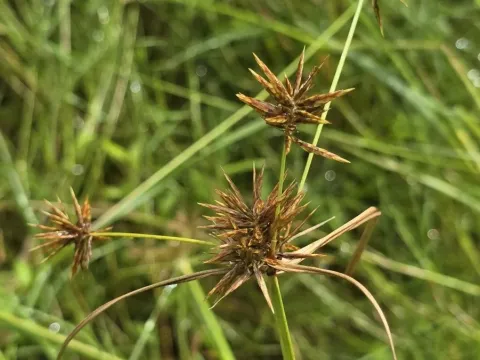
Dense-headed sedge
Cyperus congestus
Dense-headed sedge (Cyperus congestus) is a perennial herbaceous plant belonging to the Cyperaceae family. In agronomy, it is recognized for its unique ability to thrive in waterlogged environments, making it a specialized candidate for wetland reclamation.
What the section contains
Dense-headed sedge
Native to Southern Africa, this species has adapted to diverse environments ranging from wetlands to stream banks. Its natural habitat is characterized by high humidity levels and nutrient-rich soils, which dictates its successful cultivation parameters.
Botanically, the plant features triangular stems and narrow leaves arranged in basal rosettes. Its root system is composed of vigorous rhizomes, providing a strong anchoring mechanism in soft, muddy ground, which is essential for stabilizing erosion-prone areas.
Requirements for cultivation include soils that remain consistently moist throughout the growing season. While it tolerates various soil types, organic-rich loams combined with regular irrigation or proximity to water sources yield the best biomass production.
Regarding climate, Cyperus congestus prefers temperate to subtropical conditions. It requires ample sunlight for optimal growth but can tolerate partial shade, provided the moisture requirements are strictly met during the peak vegetative phase.
The primary threats to dense-headed sedge involve fungal pathogens that emerge during prolonged stagnant water conditions combined with poor airflow. Root rot remains the most common issue, often leading to rapid decline in the plant's structural integrity.
Pests such as aphids or certain species of sedge-specialized mites can cause damage to the foliage and inflorescences. Early detection is crucial, as these pests can weaken the plant's immunity, making it more susceptible to environmental stress.
Weed competition is a significant challenge during the plant's establishment phase. Fast-growing aggressive weeds can easily shade out the young seedlings of Cyperus congestus, necessitating manual weeding to ensure the plant gains a foothold.
Integrated pest management strategies should focus on maintaining a balance between moisture and drainage to prevent pathogen proliferation. Applying preventative bio-fungicides can assist in managing risk without harming the local wetland ecology.
Strategic management is also required to contain the plant's spread, as its efficient rhizomatous reproduction can lead to invasive behavior. Proper perimeter control and limiting dispersal paths are necessary to keep the cultivation area contained.