
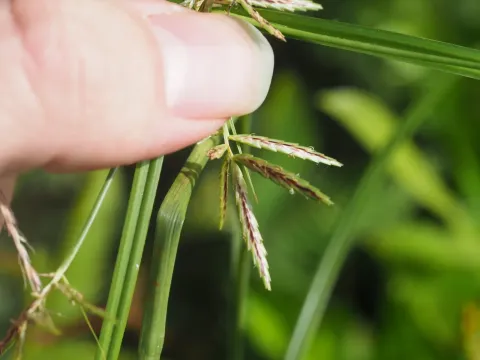
Dark nutsedge
Cyperus sphacelatus
Cyperus sphacelatus, commonly known as dark nutsedge, belongs to the Cyperaceae family. It is a perennial herbaceous plant widely recognized as a serious agricultural weed in tropical and subtropical regions, often impacting production in crops like rice and sugarcane.
What the section contains
Dark nutsedge
The plant is characterized by a vigorous rhizomatous root system. These underground structures allow the sedge to store carbohydrates and propagate vegetatively, making it difficult to eradicate once a population is well-established in a field.
Regarding habitat requirements, the species thrives in moist environments, including irrigation ditches, wetlands, and well-watered agricultural soils. It requires significant solar radiation to maintain its rapid growth rate and high biomass production throughout the season.
The species originated in tropical Africa and the Americas, showing high adaptability to various soil types. Its ability to tolerate fluctuations in water availability allows it to survive in seasonal wetlands, where it outcompetes native vegetation and crops.
Effective agronomic management requires a combination of chemical control using systemic herbicides and cultural practices. Regular tillage may provide temporary suppression, but the rhizomes must be fully destroyed or depleted to prevent rapid re-emergence of the weed.
Common threats to Cyperus sphacelatus include fungal pathogens that cause leaf spot and rust diseases. While these infections can reduce the photosynthetic capacity of the plant, they rarely succeed in eradicating the weed population in agricultural settings.
Insect pests, specifically stem-boring larvae, can damage the vegetative parts of the plant. However, due to the energy reserves stored in the extensive rhizome network, the plant typically demonstrates high resilience and recovers quickly from such herbivore pressure.