
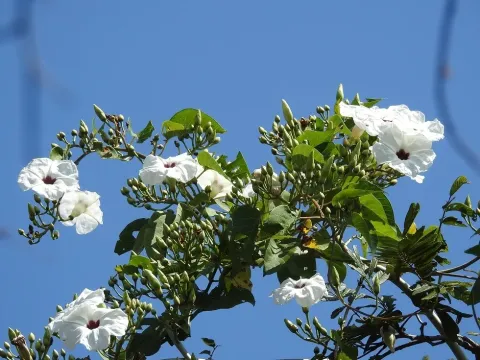
Ipomoea pauciflora
Ipomoea pauciflora
Sowing seeds of Ipomoea pauciflora is typically performed in warm climates directly into open soil once the risk of spring frost has passed. To ensure stable germination, the soil temperature should ideally remain between 18 and 20 degrees Celsius.
What the section contains
Ipomoea pauciflora
In temperate zones, it is recommended to start the plants in a greenhouse or cold frame. Seeds are sown into individual pots 4 to 6 weeks before the planned outdoor planting date, as this species does not tolerate root disturbance well during transplantation.
A crucial step during sowing is the pre-treatment of the seed coat, known as scarification, which accelerates water absorption and germination. Soaking seeds in warm water for 24 hours significantly improves the overall field emergence rate of the crop.
When sowing in the field, a planting distance of 40 to 60 centimeters should be maintained to account for the vine's growth habit. This spacing ensures proper ventilation, which is vital for preventing overcrowding and excessive moisture accumulation.
After seedlings emerge, thinning or transplanting should be handled carefully to provide each plant with adequate access to sunlight. It is important to maintain consistent soil moisture, avoiding both complete desiccation and waterlogging, which can cause seedling rot.
Ipomoea pauciflora belongs to the Convolvulaceae family and is a characteristic species of tropical and subtropical regions. The plant thrives in well-lit areas with direct sunlight, which is essential for producing abundant and vibrant blooms.
Regarding soil conditions, this crop has moderate requirements; it prefers light, well-drained loams with a neutral or slightly acidic pH level. Stagnant water in the root zone is detrimental to the survival and development of this species.
The plant exhibits high tolerance to short-term drought, an evolutionary trait from regions with pronounced seasonal rainfall deficits. However, to foster lush vegetative growth, regular irrigation is necessary during the active growing season.
The temperature regime must remain consistently warm, as even minor drops below 5 to 10 degrees Celsius can significantly slow metabolic development. The optimal range for plant growth is between 22 and 28 degrees Celsius.
Successful cultivation requires the provision of structural supports, as Ipomoea pauciflora possesses climbing vine properties. Using vertical structures allows for proper foliage distribution and ensures uniform light exposure across all stems.
The economic productivity of this crop is primarily focused on its ornamental value. Yield is measured by the intensity and duration of flowering, which are directly influenced by the agronomic management and soil nutritional balance.
Applying balanced mineral fertilizers, particularly those rich in phosphorus and potassium during the budding phase, helps achieve the maximum number of floral buds. Nitrogen applications are limited to prevent excessive leaf growth at the expense of flowering.
Yield estimation for seeds is conducted once the capsules reach full biological maturity. Harvesting is done selectively as pods turn brown to prevent premature shedding and loss of valuable genetic material.
Care of the plants includes the regular removal of spent blossoms, which encourages the plant to form new floral buds. This practice maintains a high ornamental effect throughout the growing season until the onset of the first autumn cold.
Efficient use of space through vertical gardening techniques allows for maximum visual impact per unit area. Proper training of the vines increases the density of the green screen created by the plant.
The main pests affecting Ipomoea pauciflora include sucking insects such as spider mites and aphids. These thrive in hot, dry weather, damaging young, tender leaves and hindering the overall vigor of the plant.
Fungal diseases, specifically powdery mildew, represent a threat when ventilation is poor and humidity levels remain high. Prevention measures include proper plant spacing and timely sanitary pruning of affected areas.
Root rot can occur due to improper watering practices or heavy, non-porous soil types. To manage these pathogens, systemic fungicides are applied, and soil health is improved through the application of beneficial biological products.
- Proactive monitoring for virus infections spread by insect vectors.
- Effective weed management in the rhizosphere.
- Regular inspections for signs of chlorosis or nutrient deficiencies.
When the first signs of pest infestation are detected, broad-spectrum insecticides should be utilized. It is important to rotate products to prevent the development of pesticide resistance in insect populations.
Harvesting the vegetative parts of the plant as an agricultural byproduct is usually done when preparing the plot for winter. Stems are cut back to the base, followed by disposal or composting, provided there are no signs of disease.
Seed collection is a vital stage for ensuring the propagation of the crop in the following season. Mature pods are carefully harvested to avoid damaging the interior seeds and are then dried in a well-ventilated, dry environment.
Cleaning seeds involves winnowing or sieving to remove plant debris. High-quality seed material should be dry, firm, and free from any evidence of fungal growth or insect damage.
Seeds are stored in paper bags or breathable cloth pouches to facilitate airflow. Optimal storage conditions include low, stable temperatures away from direct sunlight, which maintains high germination viability for up to three years.
In industrial or large-scale landscaping settings, the disposal of plant remains after the flowering cycle requires mechanized processes for rapid soil preparation for subsequent sowing cycles.