
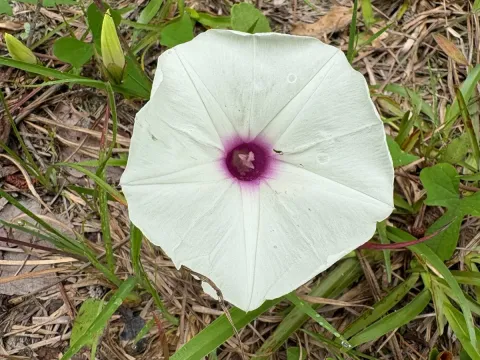
Ipomoea pandurata
Ipomoea pandurata
Sowing of Ipomoea pandurata seeds should take place in the spring once the soil temperature is consistently above 18–20 degrees Celsius for optimal germination.
What the section contains
Ipomoea pandurata
It is recommended to scarify the seeds or soak them in warm water for 24 hours prior to planting to break the seed coat and accelerate sprouting.
Starting the plants in containers indoors is a common practice to ensure a robust root system before transplanting them into the final outdoor location.
Seeds should be planted at a shallow depth of approximately 1 to 2 centimeters to provide the necessary warmth and light for successful emergence.
Ensure adequate spacing of 60 to 90 centimeters between individual plants to accommodate the vigorous growth of the vine and its massive root development.
Ipomoea pandurata, a member of the Convolvulaceae family, is a herbaceous perennial vine known for its significantly large, tuberous, edible root system.
The plant thrives in full sun exposure, which is critical for the development of its heart-shaped leaves and long, twining stems that can reach several meters.
While adaptable to various soil types, it prefers well-drained, sandy loam environments that prevent waterlogging and promote healthy root tuber expansion.
Providing a sturdy trellis or vertical support system is essential, as the plant naturally exhibits a climbing habit and requires structure for optimal sunlight capture.
Once established, the plant exhibits remarkable drought tolerance, though supplemental irrigation during the peak summer months can enhance overall tuber production.
Common pests affecting Ipomoea pandurata include spider mites and aphids, which are particularly active during hot, dry periods in the growing season.
Fungal issues like powdery mildew can appear when foliage is too dense or airflow is restricted, leading to the formation of white, dusty patches on leaves.
Root rot represents a primary threat when the plant is situated in heavy, poorly drained soils, as persistent moisture can cause the tuberous roots to decay.
Integrated pest management strategies, such as regular scouting and the use of insecticidal soaps, are effective in controlling populations without damaging the plant.
Maintaining a clean growing area by removing decaying plant matter helps significantly reduce the incidence of soil-borne pathogens and fungal spores.
The harvesting of Ipomoea pandurata roots is typically performed after two or three years of growth, allowing sufficient time for starch accumulation in the tuber.
Careful excavation using manual tools is necessary to extract the large roots intact, as they often reach deep into the soil profile and can be fragile.
Following harvest, the roots should be cleaned, washed, and dried in a well-ventilated area to prevent degradation before processing or storage.
The roots have historically served as a supplemental food source due to their starch content and have been utilized in traditional herbal medicine practices.
For long-term preservation, the harvested roots should be kept in a cool, dry environment to maintain their structural integrity and nutritional quality.