
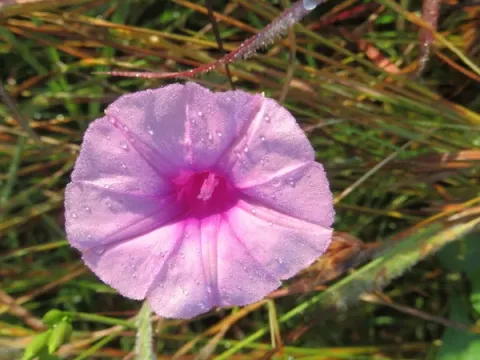
Ipomoea papilio
Ipomoea papilio
Sowing Ipomoea papilio seeds directly into the open ground is performed exclusively after the end of spring frosts, when the soil warms up to 15–18 degrees Celsius.
What the section contains
Ipomoea papilio
To accelerate flowering in regions with a temperate climate, the seedling method is recommended, where seeds are sown in individual pots in late March or early April.
The seeds of the plant have a hard seed coat, so it is recommended to soak them in warm water for a day before direct sowing to increase germination rates.
The planting depth of the seeds in the nutrient substrate is about 1–2 centimeters, which provides optimal conditions for the embryo to sprout.
When using the seedling method, it is important to carry out the transplanting very carefully, as the root system of Ipomoea papilio is sensitive to mechanical damage and recovers poorly.
Ipomoea papilio is an impressive perennial herbaceous vine from the Convolvulaceae family, native to the tropical regions of South America and Mexico.
The crop places high demands on lighting: for full growth and abundant flowering, it is necessary to choose the sunniest and wind-protected place for the plant.
The soil for planting should be loose, fertile, and have good water permeability to prevent water stagnation, which is disastrous for the root collar of the vine.
During the period of active vegetation, the plant requires regular watering; however, waterlogging of the area must be avoided, as it leads to root rot.
For the normal vertical growth of Ipomoea papilio, it is necessary to install sturdy supports, along which the plant stems can climb freely, creating a dense green cover.
The main pests affecting this crop are spider mites and aphids, which often appear during dry periods if the watering is insufficient.
In conditions of high humidity and poor air circulation, plants can be affected by powdery mildew, which manifests as a whitish coating on the leaf blades.
Root rots are a serious biological threat to Ipomoea papilio, arising from violations of irrigation agrotechnics and cultivation in heavy, waterlogged soils.
To combat insect pests in the early stages of infestation, broad-spectrum insecticides and preventive treatment with soapy water are effectively used.
Following crop rotation and the timely removal of plant debris help to significantly reduce the risk of fungal diseases throughout the season.