
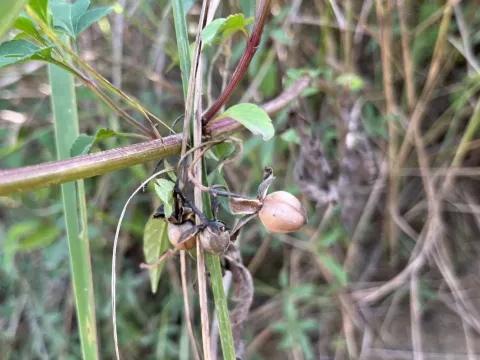
Ipomoea quinata
Ipomoea quinata
Ipomoea quinata is a climbing plant species belonging to the Convolvulaceae family. It is known for its vigorous growth and distinctive foliage, making it a subject of horticultural interest.
What the section contains
Ipomoea quinata
Seeds are typically sown in early spring in protected environments or greenhouses to ensure a sufficient growing season before the first autumn cold spells.
Preparation of the soil is critical; the substrate must be light, well-draining, and rich in organic matter to support rapid early development.
Depth of planting should be maintained at approximately 1.5-2 centimeters to allow adequate moisture retention while ensuring the seedling can emerge.
After the danger of frost has passed, seedlings can be transplanted into their permanent location in the open field, maintaining appropriate spacing for airflow.
As a species originating from tropical and subtropical regions, it thrives in warm temperatures, ideally between 22 and 28 degrees Celsius throughout the day.
Full sun exposure is necessary for the plant to achieve its potential, although partial light shade can be tolerated in extremely hot, arid climates.
Consistent soil moisture is essential; however, the root system is highly sensitive to waterlogging, requiring well-drained soil conditions at all times.
A sturdy support system is mandatory, as the climbing habit of the vine requires vertical structure for proper development of the foliage and flowers.
Regular fertilization with balanced NPK nutrients helps to sustain the rapid vegetative growth required during the peak summer months.
Spider mites are the most common pest during dry periods, often requiring specialized acaricides or increased humidity to mitigate their spread.
Aphids may target tender young shoots, particularly during early growth stages, which can be managed with insecticidal soap or biological controls.
Root rot is a major threat linked to poor soil drainage and excessive precipitation, which should be managed through improved soil aeration practices.
Powdery mildew can affect the leaves if the plant is grown in areas with poor air circulation or excessive moisture buildup on the foliage.
Effective management strategies include crop monitoring and proactive sanitation, such as the removal of debris that may harbor pests or pathogens.