
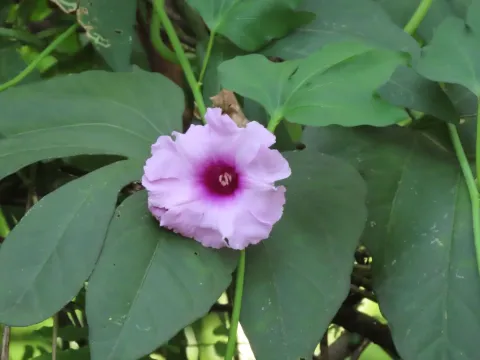
Ipomoea mauritiana
Ipomoea mauritiana
Ipomoea mauritiana is a perennial climbing vine belonging to the Convolvulaceae family. It is widely recognized for its tuberous roots, which are utilized in traditional medicine and industrial pharmacology.
What the section contains
Ipomoea mauritiana
In tropical climates, propagation is primarily achieved through stem cuttings. Cuttings of 15–20 cm are planted in nurseries during the rainy season to ensure high survival rates and rapid root development.
Seed sowing is conducted in well-prepared seedbeds with high organic matter content. Seeds typically require scarification or overnight soaking in water to break dormancy and improve germination uniformity.
Proper spacing is crucial for commercial planting. Plants should be placed at least 1–1.5 meters apart to allow for sufficient spread of the vines and to facilitate mechanical weeding and harvesting.
Vertical cultivation using trellises is recommended. This method optimizes light interception, reduces disease pressure by improving air circulation, and makes the harvesting of root tubers more efficient.
This species thrives in tropical environments with high humidity and consistent temperatures. It does not tolerate frost and requires a frost-free growing season to reach its full potential.
The soil should be fertile, sandy-loam, and well-drained. Sandy soils are particularly beneficial for the development of tuberous roots, as they allow for easier expansion and prevent waterlogging.
The plant requires full sun exposure to maintain vigorous growth. Reduced light intensity results in etiolated stems, delayed flowering, and lower concentrations of medicinal compounds in the roots.
Water requirements are significant during the peak growing season. Regular, deep irrigation is preferred over shallow, frequent watering to encourage deep root penetration and healthy tuber formation.
Soil nutrient management focuses on balanced NPK applications. Excessive nitrogen should be avoided as it promotes vegetative growth at the expense of root storage, which is the primary economic yield.
Ipomoea mauritiana is susceptible to various fungal pathogens, particularly root rot, caused by excessive soil moisture and poor drainage in the root zone.
Common pests include aphids and whiteflies, which infest the leaves and stems, sucking plant juices and potentially transmitting viral diseases that reduce overall plant vigor.
Leaf-eating caterpillars can cause significant damage during the vegetative stage. Integrated pest management (IPM) practices, including regular scouting and biological control, are recommended to mitigate these risks.
Weed management is vital during the early establishment phase. Competition for water and nutrients from invasive weeds can severely stunt the growth of the young vine.
Nematodes are another potential threat, especially in sandy soils. Crop rotation and soil solarization before planting are effective strategies to reduce nematode populations in the production area.
Harvesting of the tuberous roots occurs 18 to 24 months after planting, depending on the desired size and the concentration of active medicinal compounds within the plant tissues.
The harvesting process involves manual or semi-mechanized digging. Care must be taken to minimize tuber breakage, as damaged roots are susceptible to rapid degradation and fungal infection.
Post-harvest handling requires immediate washing to remove soil particles. Drying should commence promptly to prevent microbial spoilage of the moisture-rich root tissue.
Roots are typically sliced into smaller chips to increase the surface area for drying. Controlled air-drying or temperature-monitored dehydration at 40-45°C is ideal for preserving quality.
The final product is stored in airtight, moisture-resistant containers to maintain stability. Proper storage conditions ensure that the medicinal properties remain potent for extended periods.