
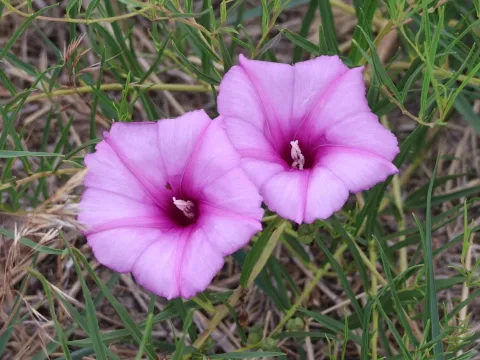
Bush morning glory
Ipomoea leptophylla
Bush morning glory (Ipomoea leptophylla) is a perennial flowering plant belonging to the Convolvulaceae family. It is native to the central United States, specifically thriving in the sandy, dry habitats of the Great Plains region.
What the section contains
Bush morning glory
This species is well-known for its deep taproot, which acts as a storage organ for water and nutrients. This morphological adaptation allows the plant to flourish in environments where most other herbaceous crops would fail due to water stress.
For successful cultivation, well-draining soils are mandatory. Whether the soil is sandy or gravelly, it must facilitate rapid water percolation to avoid crown rot. The plant performs optimally in full sun exposure and is highly intolerant to shade.
Agronomic management focuses on site selection rather than frequent input applications. Once established, the plants exhibit excellent longevity and are capable of surviving harsh winters and long, hot, arid summers without supplemental irrigation.
Preparation of the seedbed should involve deep tilling to accommodate the initial root growth, although minimal disturbance is preferred thereafter. Weed management in the first season is critical to allow the plant to establish its deep root system.
The primary threats to Ipomoea leptophylla include various root rot diseases triggered by excessive soil moisture and poor drainage. Maintaining an aerobic soil environment is the most effective preventative measure.
Pest pressures are generally low for this species compared to other agricultural crops. Occasionally, aphids may attack young stems, particularly during the early stages of the growing season when nutrient concentration in new tissues is high.
Spider mites can become an issue during periods of extreme heat and prolonged drought. Although the plant is tough, heavy mite infestation can weaken the foliage and reduce the overall aesthetic and vigor of the plant.
Fungal leaf spots can occur if planting densities are too high, reducing airflow around the canopy. Proper spacing ensures that the foliage dries quickly after dew or rain, which inhibits the germination of fungal spores.
In conclusion, the health of the crop is highly dependent on managing the physical properties of the soil rather than heavy pesticide reliance. Strategic site selection often negates the need for aggressive pest control interventions.