
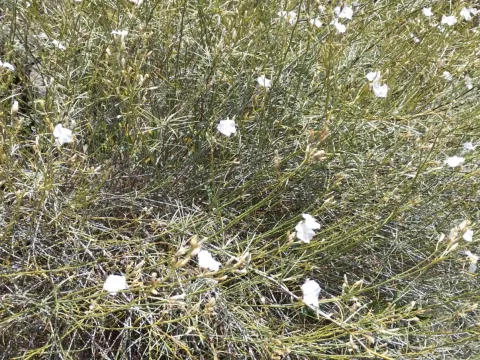
Broom bindweed
Convolvulus scoparius
Broom bindweed (Convolvulus scoparius) is a member of the Convolvulaceae family. It is a perennial woody shrub native to the Canary Islands, known for its distinct broom-like appearance and its aromatic properties.
What the section contains
Broom bindweed
The plant thrives in subtropical climates with high solar radiation. It is highly sensitive to frost, which limits its outdoor cultivation to regions that mimic its natural habitat on the volcanic slopes of the Canary Islands.
Regarding soil requirements, this species demands excellent drainage and porous, stony or sandy soil conditions. It cannot tolerate waterlogged soils, which quickly lead to root rot and physiological decline of the shrub.
Agronomic management involves careful irrigation, especially during the growth phase. It is essential to maintain a neutral to slightly alkaline pH level in the soil to optimize nutrient uptake and support the production of essential oils.
The species is visually distinct, featuring slender, erect branches and small, ephemeral leaves. Its morphology is an evolutionary adaptation to arid environments, allowing it to conserve moisture efficiently.
The plant is susceptible to various fungal pathogens, especially if environmental humidity remains high for extended periods. Proper ventilation and spacing are crucial to reduce the incidence of powdery mildew and rust diseases.
Pests like aphids and spider mites can occasionally affect young shoots. Integrated pest management (IPM) strategies, including the use of neem oil or biological controls, are recommended to maintain plant health without chemical residues.
Root rot is the most critical threat to Convolvulus scoparius. Prevention relies entirely on appropriate irrigation techniques and the use of well-structured, non-compacted growing media.
Environmental stress, such as extreme salinity or sudden temperature drops, can weaken the plant, making it more vulnerable to secondary infestations. Maintaining stable growing conditions is the primary preventive measure.
Monitoring the plant health involves regular inspections of the stem bases and the underside of the foliage. Early detection of any chlorosis or necrosis is vital for effective intervention.
The primary economic value of Broom bindweed lies in its wood, which is used to produce essential oil, often marketed as Canary Island rosewood oil. The oil is prized for its high sesquiterpene content.
Harvesting is performed by carefully pruning the older, aromatic branches. This practice must be done sustainably to ensure the plant continues to produce new, oil-rich wood for subsequent harvest cycles.
The collected branches are processed through steam distillation. This method is standard for extracting essential oils from woody tissues, ensuring that the volatile aromatic compounds are captured efficiently.
Post-harvest handling requires dry storage to prevent microbial growth. The moisture content of the harvested material should be monitored closely to ensure optimal oil yields during the extraction process.
The final oil product is utilized in the fine fragrance industry, acting as a base note in various perfumes. It is also used in aromatherapy due to its calming properties, reflecting the high value of this botanical resource.