
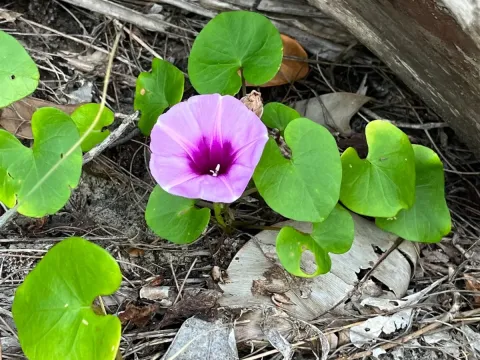
Beach morning glory
Ipomoea littoralis
Beach morning glory (Ipomoea littoralis) is a perennial vine belonging to the Convolvulaceae family. It is specifically adapted to the harsh conditions of coastal environments, acting as a natural protector of sandy shorelines.
What the section contains
Beach morning glory
The plant originates from tropical regions, where it thrives along shorelines and coastal dunes. It requires high levels of sunlight to maintain vigorous growth and produce its characteristic funnel-shaped flowers.
Regarding soil requirements, Ipomoea littoralis prefers well-drained, loose sandy substrates. Its root system is exceptionally efficient at extracting moisture while providing structural stability to unstable coastal soils.
The species demonstrates significant tolerance to salinity, a trait that makes it superior to many other ornamental vines in salt-sprayed environments. It requires a stable tropical temperature range throughout the year.
Botanically, the plant features cordate (heart-shaped) leaves and flexible, trailing stems. These adaptations allow it to spread quickly over large areas, forming a dense ground cover that prevents surface erosion.
The primary agricultural and environmental use of this culture is the stabilization of coastal dunes. By planting it, conservationists can successfully mitigate the effects of wind and water erosion on vulnerable shorelines.
Seed harvesting is conducted when the seed capsules mature and turn brown. Careful collection and storage ensure that the seeds remain viable for future sowing programs in restoration projects.
In decorative horticulture, the plant is valued for its rapid growth rate and aesthetic appeal. Propagation is typically performed via cuttings, which root easily in moist, sandy potting mixtures.
While not a major commercial food crop, the biomass produced by this plant serves as an effective soil amendment, adding necessary organic carbon to poor, nutrient-deficient sandy soils.
Maintaining the health of these coastal plantings involves minimal intervention, though monitoring for invasive species that might compete for sunlight is recommended for optimal restoration outcomes.