
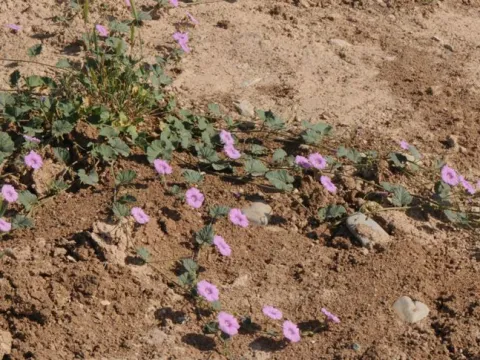
Bindweed (Convolvulus stachydifolius)
Convolvulus stachydifolius
Convolvulus stachydifolius, commonly known as a type of bindweed, is a perennial herbaceous plant belonging to the Convolvulaceae family. In an agricultural context, it is recognized as a persistent weed that significantly competes with crops for soil resources and sunlight.
What the section contains
Bindweed (Convolvulus stachydifolius)
Its natural range extends across the steppe and semi-arid regions of Central Asia and parts of Eastern Europe. The species is highly adapted to arid environments, possessing physiological traits that allow it to thrive where other vegetation struggles due to moisture deficits.
The botanical structure of the plant features a robust and extensive root system capable of penetrating deep into the subsoil. The leaves are distinctively shaped, resembling those of stachys, while the vining stems allow the plant to climb and cover cultivated crops, leading to lodging and harvest difficulties.
Environmentally, the plant prefers well-drained soils and high-intensity sunlight. It exhibits remarkable tolerance to salinity and low nutrient levels, making it a frequent colonizer of fallow fields, pastures, and poorly maintained agricultural land.
Effective agronomic management requires a combination of deep tillage, which breaks up the rootstocks, and the application of systemic herbicides. Implementing a well-structured crop rotation is vital, as it disrupts the growth cycle of this persistent perennial and reduces its dominance in the field.
While the plant is highly resilient, it can be susceptible to various fungal pathogens, particularly under conditions of high humidity or poor field drainage. Rust fungi and various leaf spots are known to occasionally colonize the foliage, though these rarely cause significant population reduction.
Insect pests, including certain species of beetles and caterpillars, may feed on the plant, but they rarely threaten its survival. Due to the deep-seated nature of its root system, the plant is capable of rapid regrowth even after extensive defoliation by herbivores, necessitating sustained control efforts.