
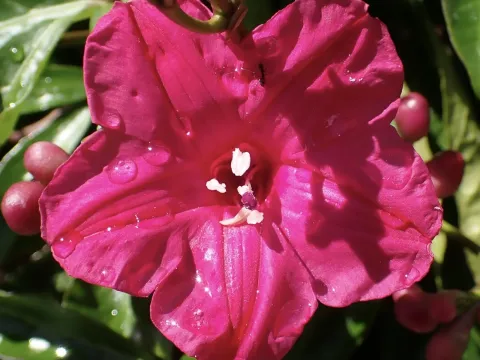
Ipomoea horsfalliae
Ipomoea horsfalliae
Ipomoea horsfalliae, commonly known as Horsfall's morning glory, is a stunning perennial evergreen vine belonging to the Convolvulaceae family. Native to the tropical regions of the West Indies, it is prized for its lush, glossy dark green foliage and vibrant, trumpet-shaped deep magenta to purple flowers.
What the section contains
Ipomoea horsfalliae
To thrive, this plant requires consistently warm temperatures, as it is extremely sensitive to frost. The ideal environment mimics its natural tropical habitat or a greenhouse setting where temperatures do not drop below 15 degrees Celsius even during the night.
Soil requirements involve a fertile, loose, and well-drained substrate. The plant reacts poorly to waterlogging in the root system; therefore, ensuring a high-quality drainage layer is critical when planting in containers or outdoors.
The location for this vine should receive maximum sunlight but must be shielded from harsh, scorching direct sun during peak afternoon hours. In temperate climates, cultivation is restricted to greenhouses or as a container plant that must be moved indoors before the first frost.
Standard care involves regular moderate watering, allowing the soil surface to dry out slightly between applications. During the active growing season, regular fertilization with low-nitrogen, high-phosphorus fertilizers is essential to encourage prolific blooming rather than excessive leaf production.
The primary pests affecting Ipomoea horsfalliae under poor growing conditions are spider mites and aphids. Dry indoor air frequently triggers mite colonies on the undersides of leaves, necessitating the use of targeted acaricides for control.
Mealybugs also pose a significant threat by settling in leaf axils and stem nodes. Regular inspection and maintaining optimal relative humidity levels are the best preventive measures to ensure plant health and prevent overcrowding.
Fungal diseases, such as root rot, often result from overwatering and inadequate ventilation in the root zone. It is vital to use only sterilized potting medium and to ensure that vines do not touch cold, wet soil surfaces.
In cases of powdery mildew infestation, fungicides based on sulfur or systemic compounds are recommended. It is also crucial to prune away infected plant parts immediately to prevent the spread of fungal spores to healthy shoots.
For early-stage insect control, mild soapy water or neem oil solutions are effective. In instances of severe infestation, utilize broad-spectrum insecticides while strictly adhering to label directions and personal safety protocols.