
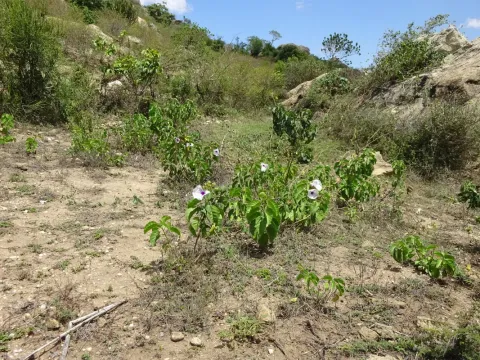
Ipomoea hildebrandtii
Ipomoea hildebrandtii
Ipomoea hildebrandtii belongs to the Convolvulaceae family, representing a climbing vine species characterized by its robust growth and specific environmental needs. This plant acts as an ornamental or specialized agricultural crop in tropical climates.
What the section contains
Ipomoea hildebrandtii
Originating from East Africa, the plant thrives in regions where temperatures remain consistently warm throughout the year. It does not possess significant frost tolerance, making it suitable only for outdoor cultivation in tropical or subtropical zones or inside greenhouses in cooler regions.
Soil requirements for Ipomoea hildebrandtii include well-drained, sandy loam or loamy soils. It requires a neutral to slightly acidic pH level, and it is highly imperative to ensure that the substrate is not waterlogged, as the roots are prone to rapid decay in stagnant moisture.
The plant requires full sun exposure to maintain optimal vegetative growth and to trigger flowering. In areas with reduced solar intensity, the plant exhibits stunted development and produces fewer flowers, which impacts its overall agronomic value and aesthetic appeal.
Agronomic management involves a consistent irrigation schedule that mimics tropical rainfall patterns. During the active growing season, providing balanced nitrogen-phosphorus-potassium (NPK) fertilizers helps support the plant's rapid climbing habit and extensive leaf production.
Fungal diseases, particularly root rots such as Pythium or Phytophthora, pose the greatest threat to Ipomoea hildebrandtii. These pathogens thrive when the drainage system is inadequate, necessitating strict moisture control in the planting environment.
Spider mites are a primary pest, especially when the ambient air becomes too dry or hot. These microscopic pests feed on the underside of leaves, causing stippling and eventual leaf drop, which weakens the plant significantly if left untreated.
Mealybugs are another common challenge, appearing as white, cotton-like masses in leaf axils. They extract sap from the plant and can be difficult to eliminate without the use of systemic insecticides or horticultural oils applied at the onset of the infestation.
Aphid populations can colonize tender new shoots and buds, resulting in distorted growth and the transmission of secondary viral issues. Regular monitoring of new growth is essential to identify and address these infestations early in the cycle.
Integrated Pest Management (IPM) practices, including the use of beneficial insects and preventative fungicide applications, are highly recommended. Maintaining good air circulation and removing any debris around the base of the vines further reduces the risk of disease outbreaks.