
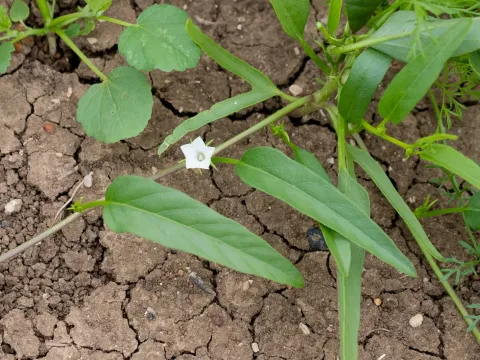
Ipomoea lonchophylla
Ipomoea lonchophylla
Ipomoea lonchophylla is a warm-season annual crop that requires steady, high temperatures to germinate and thrive. In its natural range, sowing typically begins at the onset of the rainy season when soil temperatures remain consistently above 20 degrees Celsius.
What the section contains
Ipomoea lonchophylla
Successful establishment depends heavily on correct seed placement depth, usually between 2 and 3 centimeters. Planting too deep in heavy clay soils can lead to seed dormancy or rot, significantly reducing the final plant population.
For commercial production, precision seeding methods are recommended to ensure uniform spacing. Providing adequate space between plants is essential for airflow and helps mitigate the risk of fungal outbreaks later in the growing season.
In regions with shorter growing seasons, starting seeds in controlled environments or using transplanting methods can significantly increase the chances of a successful harvest. This provides the plants with a critical head start against late-season cooling.
Proper field preparation, including the creation of a fine seedbed, is necessary to encourage rapid emergence. Ensuring good seed-to-soil contact through light rolling or pressing after sowing is standard practice for this species.
As a member of the Convolvulaceae family, Ipomoea lonchophylla thrives in environments with high light intensity. It is essential to select sites with full sun exposure, as any significant shading will negatively impact the plant's structural integrity and biomass.
The plant performs best in loose, well-drained loamy or sandy soils. It is highly sensitive to waterlogged conditions, which can quickly lead to root decay and severe physiological stress, necessitating proper field drainage planning.
While the crop exhibits a degree of drought tolerance once established, consistent moisture levels during the vegetative phase are key to maximizing yield. Irrigation management should focus on keeping the root zone consistently moist but never saturated.
Weed management is a critical component of Ipomoea lonchophylla agronomy, especially during the first few weeks of growth. The crop is a poor competitor against aggressive weeds and requires mechanical inter-row cultivation or mulching to succeed.
Nutrient requirements for this species are moderate, but it responds well to balanced fertilization programs. Specifically, maintaining adequate levels of potassium helps improve the plant's overall stress tolerance and photosynthetic efficiency.
The most common pests affecting Ipomoea lonchophylla include various species of aphids and spider mites. These sap-sucking insects can severely weaken the plant by depriving it of nutrients and inducing chlorosis on the leaves.
In humid conditions, leaf spot diseases can emerge, leading to premature defoliation. Preventive measures include ensuring good spacing between plants to promote evaporation and reduce the duration of leaf wetness after rain or irrigation.
Root-related pathogens can become an issue if the soil remains excessively wet for long durations. Improving soil drainage and strictly avoiding over-irrigation are the best strategies for preventing root-based fungal infections.
Integrated Pest Management (IPM) practices are highly recommended for this crop. This involves monitoring pest populations closely and utilizing selective control measures only when thresholds are exceeded to preserve beneficial insect populations.
Maintaining a rigorous crop rotation schedule is essential for breaking the life cycles of soil-borne pests and diseases. Planting Ipomoea lonchophylla in the same field year after year significantly increases the pressure from localized pathogens.