
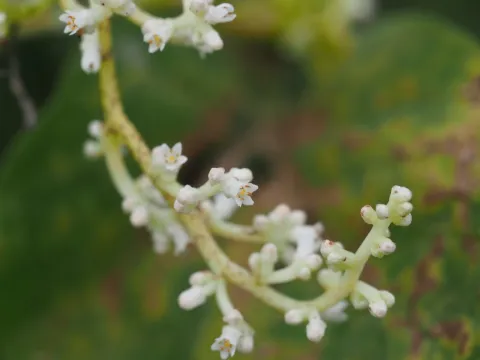
Japanese dodder
Cuscuta japonica
Japanese dodder (Cuscuta japonica) is not an agricultural crop but a parasitic plant belonging to the Convolvulaceae family. As an obligate parasite, it lacks roots and true leaves, and its life cycle does not involve sowing in the soil.
What the section contains
Japanese dodder
Seeds germinate in late spring or summer when soil temperatures reach 15–20 degrees Celsius. The survival of the seedling depends entirely on its ability to attach to a suitable host plant within a few days of germination; otherwise, it will wither and die due to energy depletion.
In natural conditions, it reproduces through seeds, which can remain viable in the soil for years. In agricultural environments, human activities such as transporting infected plant material or using contaminated seeds are the primary vectors for its spread.
Germination is often staggered throughout the growing season, which complicates control efforts. Once attached, the parasite grows rapidly, forming a dense web of yellow or orange stems that coil around the host and penetrate its tissues with haustoria.
Vegetative reproduction is also a significant factor. Small fragments of the dodder stem can break off, attach to a new host, and initiate a new infestation. This requires rigorous sanitation in fields and orchards to prevent further dispersal.
The Japanese dodder is highly adaptable to various environmental conditions, allowing it to thrive in diverse ecosystems. It favors open, sunlit areas where vegetation is dense, providing a constant supply of potential hosts for the parasite to exploit.
Moderate to high humidity is beneficial for the establishment of haustoria, the specialized organs used by the dodder to extract water and nutrients from the host. High temperatures during the peak of summer significantly accelerate its growth rate and parasitic activity.
Soil quality is irrelevant to the dodder itself since it derives all nutritional needs from the host plant. However, fertile soil supports the robust growth of host plants, which in turn provides more resources for the dodder to sustain its rapid expansion.
Agrotechnical management strategies must focus on creating environments unfavorable for the parasite. This includes regular field monitoring, deep tillage to bury seeds, and crop rotation with non-host species to break the parasite's life cycle.
Control also requires management of field margins and surrounding areas, as the dodder often spreads from wild shrubs and weeds into cultivated fields. Effective management is dependent on early detection before the infestation becomes widespread.
Japanese dodder is classified as a quarantine pest in many jurisdictions because it has few natural enemies capable of limiting its population. Its aggressive nature makes it a formidable threat to horticulture, forestry, and cereal crops.
A primary risk associated with the dodder is its role as a vector for plant viruses. It can transmit various viral pathogens and phytoplasmas between plants, causing widespread disease outbreaks that are often more destructive than the physical damage caused by the parasite.
The physical damage manifests as severe stunting, leaf chlorosis, and reduced vigor of the host plant. If left untreated, the host plant will eventually succumb to starvation as the dodder diverts all available photosynthates and water for its own development.
Control is challenging because the parasite and host are biologically linked. Chemical herbicides that kill the dodder often damage the host as well, necessitating precise application or the removal and destruction of the entire infected plant mass.
- Strict inspection of imported seeds and agricultural products for contamination.
- Immediate removal and burning of infested plant parts upon discovery.
- Use of certified, dodder-free seed for all planting purposes.
- Implementation of biosecurity measures for machinery moving between fields to prevent seed transport.