
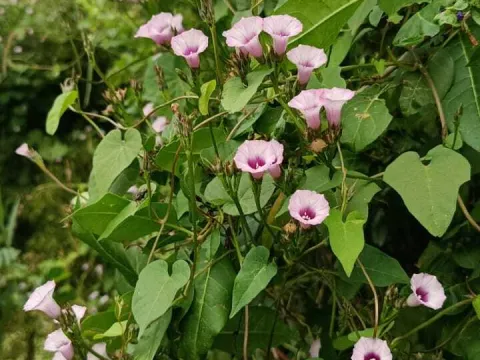
Largeleaf morning glory
Ipomoea grandifolia
The largeleaf morning glory is a thermophilic annual crop that requires stable soil temperatures to trigger the germination of its dormant seeds.
What the section contains
Largeleaf morning glory
Sowing typically occurs in late spring, as the plant demands significant warmth for initial development and root establishment in the field.
Seed persistence in the soil bank is high, allowing the species to emerge intermittently over several years if conditions remain favorable.
In agricultural settings, precise timing is essential to manage seed germination patterns and prevent the unchecked spread of the species during the season.
Optimal germination requires adequate soil moisture combined with consistent heat, usually surpassing the threshold for most cool-season crops.
This species, belonging to the Convolvulaceae family, exhibits strong light-seeking behavior and thrives in environments with intense solar radiation.
The plant demonstrates significant soil plasticity, growing well in various textures, provided that the soil is sufficiently aerated and fertile.
Water requirements are moderate, though the large leaf surface area increases transpiration rates, necessitating consistent moisture during dry spells.
Growth habits involve climbing or trailing stems that can quickly cover large areas, effectively competing with other plants for space and solar access.
Proper nutrient management is necessary to support the rapid biomass accumulation that occurs during the mid-summer peak of the growing cycle.
In field production, Ipomoea grandifolia is often managed as a competitive weed that can significantly reduce the harvest volume of adjacent crops.
Common fungal threats include powdery mildew, which proliferates in the dense foliage of the plant when airflow is limited and humidity levels rise.
Pest pressures include aphids and spider mites, which can cause significant damage to the plant tissue if not addressed through integrated management.
Control strategies often involve a combination of mechanical cultivation to disrupt root systems and selective herbicide applications to target unwanted growth.
- Leaf spot diseases caused by fungi.
- Infestations by sap-sucking insects.
- Root damage from excessive soil moisture.