
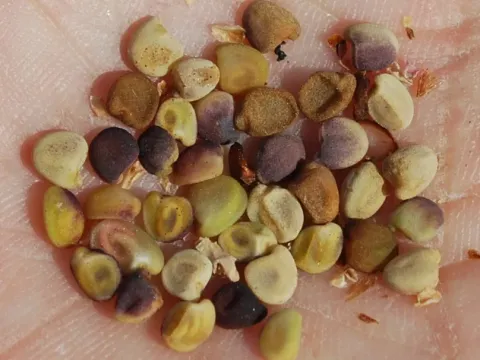
Lehmann's dodder
Cuscuta lehmanniana
Lehmann's dodder (Cuscuta lehmanniana) is a parasitic plant belonging to the Convolvulaceae family. It is an obligate parasite, meaning it lacks chlorophyll and roots, relying entirely on host plants for water, minerals, and carbon compounds.
What the section contains
Lehmann's dodder
The morphology of the plant consists of thin, thread-like stems that twine around the stems of host plants. It uses specialized organs called haustoria to penetrate the epidermis and vascular bundles of the host to extract essential resources effectively.
The native distribution of this species is found in Central Asia, where it thrives in arid and semi-arid conditions. It is particularly well-adapted to high temperatures and requires sufficient host availability, frequently targeting alfalfa fields and vegetable crops.
Climatic requirements are focused on heat units for seed germination. Once germinated, the seedling must physically attach to a host plant within a few days; otherwise, the reserves in its embryo will be exhausted, and it will perish.
Agricultural management is difficult because the weed's life cycle is so closely tied to the host crop. Farmers rely on clean seed certification, crop rotation with non-host species like cereals, and early detection of infestations to prevent the spread of the tiny, resilient seeds.
The primary threat posed by Cuscuta lehmanniana is the severe reduction in crop yield and quality. By siphoning nutrients, the dodder causes plants to stunt, wilt, and eventually die, often leading to the complete loss of a field's commercial value.
In addition to nutrient theft, this species acts as a bridge for plant viruses. It easily transmits pathogens from one plant to another, leading to disease outbreaks that can spread rapidly throughout an entire agricultural region.
Control strategies often involve the use of contact and systemic herbicides, though the application must be carefully timed. Mechanical removal of infested plants remains the most effective, albeit destructive, method of ensuring the weed does not set seeds.
Biological control agents, such as specific gall midges, have been studied to reduce the vigor of dodder populations. While these insects can cause significant damage to the weed's flower clusters, they are rarely sufficient on their own to eradicate the infestation.
The high longevity of the seeds in the soil makes Cuscuta lehmanniana a persistent threat. Strict quarantine regulations prevent the movement of contaminated agricultural machinery and fodder, which are the main pathways for the introduction of new outbreaks.