
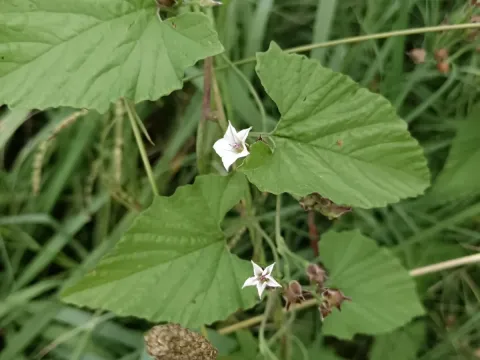
Mealy bindweed
Convolvulus farinosus
Mealy bindweed (Convolvulus farinosus) is a perennial herbaceous plant belonging to the Convolvulaceae family. The specific epithet farinosus refers to the mealy, flour-like appearance on the undersides of its leaves, which is a diagnostic botanical feature of this species.
What the section contains
Mealy bindweed
Originating primarily from the African continent, this species is well-adapted to warm, tropical, and subtropical environments. It thrives in regions with consistently high temperatures and requires significant exposure to direct sunlight to sustain its vigorous growth patterns.
Cultivation success depends heavily on the choice of soil. The species prefers light, well-draining soil structures, such as sandy loams, that prevent waterlogging. Poor drainage can easily lead to root rot, which is the most common cause of failure in agricultural production settings.
Agronomic management involves maintaining a steady moisture level, as the plant responds well to irrigation during the peak growing season. While it exhibits some tolerance for drought, consistent moisture levels are essential for achieving optimal biomass development.
The plant has limited commercial applications, being primarily valued for botanical research, niche landscape gardening, and traditional medicinal uses in its native range. Modern agricultural efforts are directed toward maintaining genetic diversity and understanding its unique physiology.
The primary threats to mealy bindweed include fungal infections that manifest during periods of high humidity or inadequate air circulation. Powdery mildew is the most prevalent disease, capable of quickly reducing the photosynthetic efficiency of the plant leaves.
Insect pests, particularly aphids and spider mites, pose significant challenges in controlled environments. These pests thrive in dry conditions and can cause severe damage to young foliage. Integrated pest management strategies are highly recommended to ensure the long-term health of the crop.