
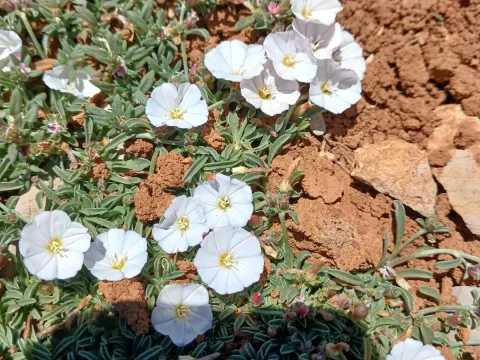
Lebanese bindweed
Convolvulus libanoticus
Lebanese bindweed (Convolvulus libanoticus) is a perennial herbaceous plant belonging to the Convolvulaceae family. It is a specialized species native to the rocky slopes of the Lebanese mountains, adapted to survive in harsh alpine environments.
What the section contains
Lebanese bindweed
This species thrives in well-drained, gritty, or limestone-based soils. It is naturally equipped to handle poor soil fertility, but it is highly intolerant of waterlogged conditions, which can lead to root system decay and rapid decline of the plant.
In terms of climate requirements, this plant is a xerophyte that favors high solar radiation and good airflow. It requires a distinct seasonal cycle with cool, dry winters and warm, sunny growing seasons to maintain its compact, mound-forming habit.
Cultivation practices for this species focus primarily on mimicking its natural alpine habitat. This involves planting in raised beds or troughs where drainage is superior to flat garden beds, ensuring that moisture is quickly cleared from the root zone.
Regarding its utility, the plant is primarily used in specialized ornamental gardening. It is highly valued for its striking blue-purple flowers and its ability to cover rocky terrain, making it an excellent candidate for rock gardens and xeriscaping.
The primary threats to Convolvulus libanoticus are fungal infections, specifically root rots caused by excessive soil moisture during the dormant season. Good drainage is the most effective preventative measure against these pathogens.
Insect pests such as aphids can occasionally colonize the tender young shoots. In dry, hot conditions, spider mites may also appear, although they are less common if the plant is grown in a proper, well-ventilated location.
Preventive measures include maintaining appropriate soil pH and avoiding overhead irrigation, which can create microclimates conducive to fungal spores. Keeping the area surrounding the plants free of decaying organic matter also reduces risk.
If an infestation or infection is detected, prompt action is required. Removing the affected plant tissue and applying a suitable fungicide or insecticide can save the remaining parts of the plant and prevent further spread.
Overall, Lebanese bindweed is a robust species when its specific environmental requirements are met. It demonstrates high resistance to biotic stressors if the abiotic conditions of its environment are kept close to its native mountain profile.