
Convolvulus pentapetaloides
Convolvulus pentapetaloides
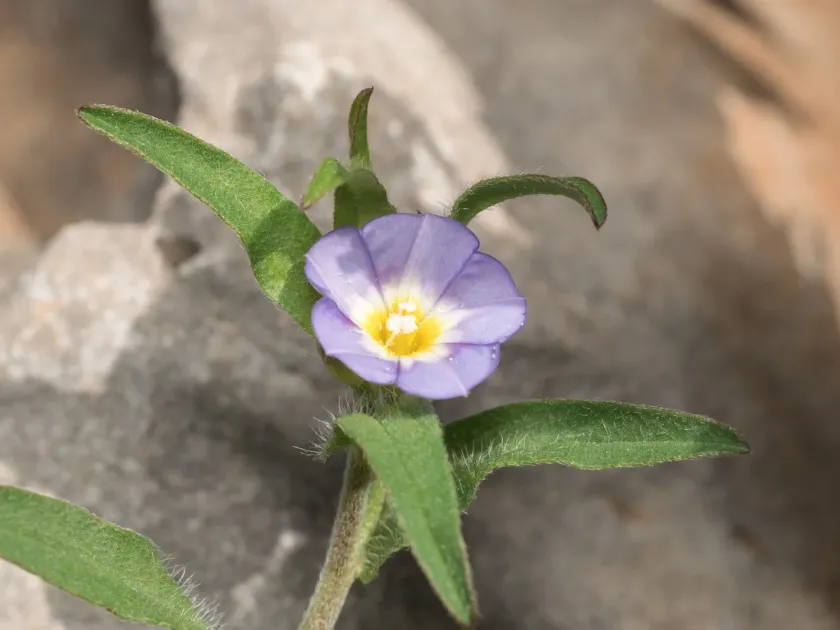
Description
Growing requirements
Convolvulus pentapetaloides is a plant species belonging to the Convolvulaceae family. While it possesses distinct botanical characteristics, it is primarily managed as a competitive weed within agricultural systems rather than a cultivated crop.
Originating from the Mediterranean region, this species has adapted to arid and semi-arid environments. Its range spans across various temperate and subtropical zones, where it thrives in open areas, meadows, and disturbed agricultural land.
The plant demonstrates a strong preference for well-drained, sandy or gravelly soils. It is particularly successful in low-fertility areas where its deep root system allows it to access water sources that are unavailable to more demanding crop species.
Morphologically, it is an annual herb characterized by a prostrate or climbing habit, depending on the availability of physical support. The leaves are typically narrow, and the flowers exhibit the iconic trumpet shape, often displaying delicate color gradients.
Climatic requirements revolve around high solar radiation and a dry, warm summer season. It is not frost-tolerant, meaning its presence in agricultural fields is largely dictated by the onset of spring warmth and the specific local microclimate.
Main diseases and pests
Common plant diseases affecting this species include rust fungi, which are often found on the underside of leaves during periods of increased relative humidity, leading to premature senescence.
Pests that frequently colonize the plant include various leaf-feeding insects and spider mites, which can cause significant tissue damage during peak drought conditions in mid-summer.
From an agricultural management perspective, this plant is treated with competitive crop rotation and the strategic application of herbicides to prevent it from establishing a persistent seed bank.
Integrated weed management remains the most effective approach, combining mechanical cultivation with herbicide applications that specifically target the physiological pathways of vining weeds.
Frequent field inspections are recommended to detect the presence of Convolvulus pentapetaloides during early growth stages to minimize the need for heavy chemical intervention later in the season.