
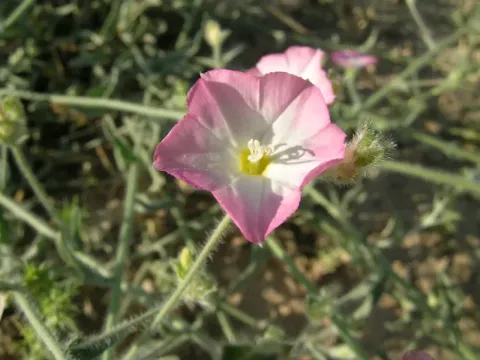
Convolvulus pilosellifolius
Convolvulus pilosellifolius
Convolvulus pilosellifolius is a perennial herbaceous plant belonging to the Convolvulaceae family. Within agricultural contexts, it is primarily recognized as a persistent weed that poses significant challenges due to its extensive and resilient subterranean root network.
What the section contains
Convolvulus pilosellifolius
The plant originates from the arid and semi-arid regions of Eurasia, commonly found in steppes and disturbed habitats. It thrives in environments characterized by high solar radiation and periodic water scarcity, demonstrating remarkable survival strategies in harsh conditions.
Botanically, this species is defined by its pubescent foliage and funnel-shaped flowers typical of the bindweed genus. Its deep-reaching root system allows it to extract moisture from soil layers inaccessible to most annual crop plants, facilitating its dominance in dry climates.
Regarding soil requirements, the plant shows great flexibility, prospering on rocky, sandy, and saline soils where nutrient availability is limited. Its ability to tolerate low soil fertility and high evaporation rates makes it a formidable competitor in diverse agroecosystems.
Effective management requires integrated agricultural practices. Key strategies include frequent mechanical tillage to exhaust root carbohydrate reserves and the application of systemic herbicides. Crop rotation with dense, shade-providing species can also inhibit the photosynthesis of the weed.
Convolvulus pilosellifolius is notably resistant to most common crop pathogens. Due to its physiological adaptations, it is rarely impacted by diseases, which allows it to maintain consistent growth even when surrounding vegetation suffers from fungal or bacterial infections.
Pest pressure on this species is minimal. While some specialized leaf-chewing insects may feed on its foliage, they do not cause enough mortality to mitigate the plant's spread. The resilience of the root system ensures recovery even after significant damage to the plant's aerial parts.