
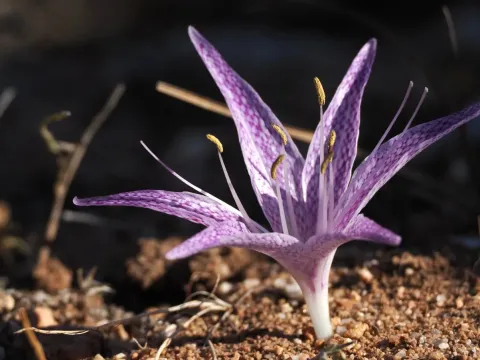
Colchicum variegatum
Colchicum variegatum
Planting of Colchicum variegatum should ideally take place in late summer, specifically during August. At this time, the corm is in a state of dormancy, which is the perfect window for successful establishment before the autumn flowering cycle.
What the section contains
Colchicum variegatum
The planting depth should be approximately 10-15 centimeters, depending on the size of the corm. It is highly recommended to place a layer of gravel or sand at the bottom of the planting hole to ensure proper drainage and prevent bulb rot.
Vegetative propagation is the most common method, involving the division of corm clusters every few years. This practice keeps the plant population vigorous and allows for the expansion of the plantation in favorable conditions.
A spacing of 15-20 centimeters between plants is recommended to promote adequate airflow. This simple measure significantly reduces the development of fungal pathogens and ensures that each plant has enough nutrients for development.
Select a permanent site for the corms, as they do not tolerate frequent transplanting. A spot that is sheltered from heavy winds and maintains good drainage throughout the year will ensure the longevity of the plant.
Colchicum variegatum belongs to the Colchicaceae family and is native to the Balkan Peninsula and Western Turkey. It is adapted to a Mediterranean climate characterized by hot, dry summers and mild, rainy winters.
The soil must be fertile, light, and well-drained. Heavy clay soils are unsuitable, as they retain excess moisture during the summer dormancy period, which can cause the corms to perish quickly.
This species thrives in sunny locations but can tolerate partial shade during the hottest parts of the day. In lower light conditions, the plant's growth may become spindly, which weakens the overall structure and future flowering.
Watering requirements are specific: moisture should only be provided during the spring when the foliage is actively growing. Once the leaves turn yellow and die back, the plants must remain dry until the flowers emerge in the autumn.
In regions with harsh winters, covering the soil surface with organic mulch, such as leaf mold or compost, is beneficial. This protects the corms from deep freezing and maintains soil structure during seasonal transitions.
Slugs and snails are the most prominent pests, particularly in the spring when tender foliage begins to emerge. Implementing physical barriers or using baits can effectively manage these populations before they cause significant damage.
Fungal diseases, most notably Botrytis (gray mold), pose a severe threat in overly damp environments. Maintaining optimal soil drainage and avoiding overcrowded planting can mitigate the risk of these diseases spreading.
Viral infections can cause mottled patterns on leaves and petal distortion, rendering the flowers unsightly. Since there is no cure for viral plant diseases, affected corms must be removed and destroyed to protect healthy specimens.
Rodents such as voles or field mice may consume the corms, especially during winter months when food sources are scarce. Using wire or plastic mesh cages during planting is a standard protective measure against such damage.
Regular monitoring of the plantation is essential for identifying early signs of distress. Fungicidal treatments should only be used preventively or in the early stages of infection, following specific label instructions for bulbs.