
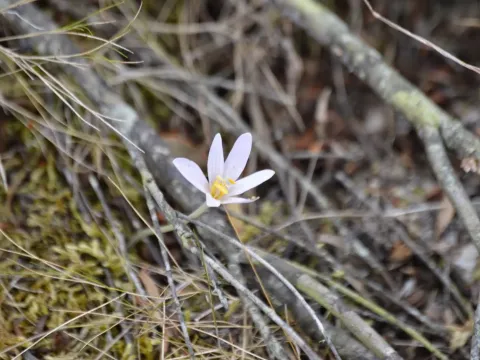
Corsican meadow saffron
Colchicum corsicum
The Corsican meadow saffron (Colchicum corsicum) belongs to the Colchicaceae family and is a native species to the island of Corsica. It is a geophyte that follows a distinct life cycle, where vegetative foliage appears in the spring, while the flowering stage occurs in autumn.
What the section contains
Corsican meadow saffron
Cultivation of this species requires well-drained soil to prevent rot during the dormancy period. The plant prefers light, sandy-loam soils that mirror its natural Mediterranean habitat, ensuring that water does not pool around the corms during the winter or spring months.
Optimal growth is achieved in sunny locations where the soil can warm up effectively during the summer months. This thermal regime is critical for the differentiation of flower buds within the corm, which is essential for successful autumn blooms.
Agrotechnical maintenance includes minimal intervention during the summer dormancy. It is advisable to avoid excessive irrigation during this time, as the plant enters a period of biological rest where metabolic activity is significantly reduced.
In landscaping, this plant is primarily used as a feature in rock gardens and herbaceous borders. Its ability to produce flowers from bare ground makes it a highly desirable architectural element for late-season gardens.
The most common disease affecting Colchicum corsicum is basal rot, often caused by poor drainage and excessive moisture. This fungal infection leads to the decay of the root system and the eventual death of the entire corm if not addressed promptly.
Gastropods, such as slugs and snails, are major pests that target the foliage during the spring growing phase. Controlling these pests is vital for the plant to store enough energy for subsequent flower production.
Bulb flies can cause significant mechanical damage to the tissues of the corm, often serving as entry points for secondary bacterial and fungal infections. Regular monitoring is recommended during the growing season.
To prevent disease outbreaks, it is crucial to maintain adequate spacing between plants to ensure good air circulation. Removing debris from the planting site also reduces the harborages available to pests.
Crop rotation and soil amendments, such as adding grit or coarse sand, help to mitigate the risks of soil-borne pathogens. Maintaining high hygiene standards during bulb division is essential for long-term health.