
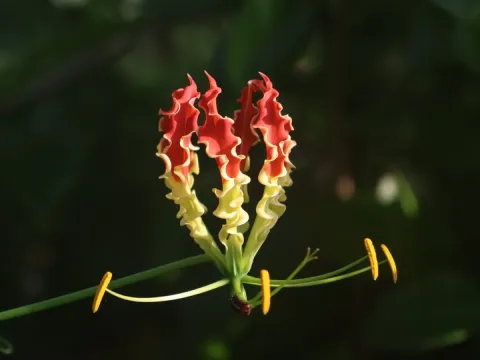
Gloriosa
Gloriosa L.
Planting Gloriosa is carried out during the spring period when the soil temperature consistently reaches at least 20 degrees Celsius. Tubers are planted in light, loose, well-draining substrate at a depth of about 8–10 centimeters to prevent moisture stagnation and root rot.
What the section contains

Gloriosa
For greenhouse or indoor cultivation, planting times may vary, but the availability of sufficient natural light remains a key factor. The plant is extremely sensitive to late frosts, so moving it to open ground is only possible after all danger of night temperature drops has passed.
It is important to consider the fragility of the rhizome: it can be easily damaged during planting, which significantly slows down shoot development. It is recommended to use containers with a volume of at least 3–5 liters per plant to ensure sufficient space for active root system growth.
To speed up germination, some agronomists recommend soaking the tubers in growth stimulator solutions for several hours before planting. It is also necessary to provide supports immediately, as Gloriosa shoots possess a natural ability to climb using tendrils on their leaf tips.
Propagation by seeds is less common as it requires strict adherence to temperature regimes (around 25 degrees) and high air humidity. The period from sowing to seedling emergence can take several months, making this method less suitable for large-scale production.
Gloriosa, a member of the Colchicaceae family originating from tropical Africa and Asia, has strict requirements for its environment. The optimal temperature range for active growth and development is between 22 and 28 degrees Celsius.
The plant prefers bright but diffused light, as direct sunlight can cause scorching on the delicate foliage. Insufficient lighting causes stems to become thin, elongated, and weakens the plant's ability to bloom, which significantly reduces its overall aesthetic value.
The soil must be nutritious, slightly acidic, and have excellent drainage properties. Mixtures based on leaf soil, peat, and coarse sand are ideal. Regular potassium-based fertilizer applications during the budding stage significantly increase the brightness and size of the flowers.
Watering should be moderate and regular during the active growing season, but must be significantly reduced during the dormancy period. It is important to maintain stable air humidity, as Gloriosa reacts poorly to dry air, which may lead to bud drop.
At the end of the vegetative cycle, the plant requires a rest period where the aerial parts die back and the tubers are stored in a cool place at approximately 12–15 degrees. Observing this cycle is critical for successful future blooming and general plant health.
The main threats to Gloriosa in indoor or greenhouse conditions are sap-sucking pests such as spider mites and aphids. These pests multiply rapidly in low humidity environments and can quickly weaken the plant by extracting nutrients from young shoots.
Mealybugs are also common pests for this crop. Upon detection of early signs of infestation, it is necessary to apply systemic insecticides to prevent the further spread of parasites throughout the plant collection.
Fungal diseases, often caused by excessive watering and poor air circulation, frequently affect the root system. Root rot leads to rapid wilting of the stems and the death of tubers, so prevention relies on strict moisture control and substrate sterilization.
Viral diseases may manifest as leaf deformation or the appearance of specific mosaic spots. Since there are no effective treatments for viral infections, affected specimens should be destroyed immediately to protect healthy plants from spreading the infection.
- Mite prevention: regular misting and maintaining high humidity levels.
- Rot control: application of copper-based fungicides.
- Monitoring: weekly inspection of the underside of the leaves.